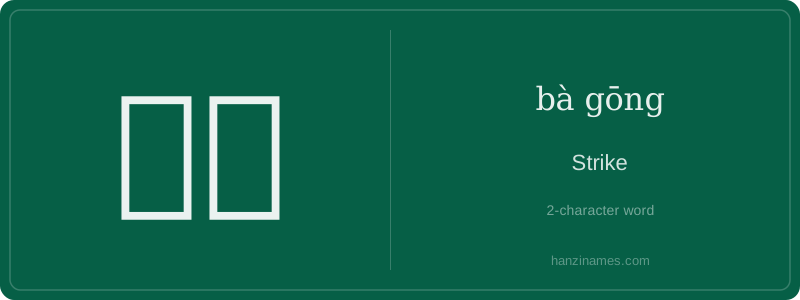
罢工
How to Say
👀 0
How to Write
Meaning: Strike
How to Understand
罢工
罢工 refers to a collective work stoppage by employees to protest or demand better working conditions, wages, or other rights. It is often organized by labor unions and can have significant economic and social impacts.
The character 罢 (bà) originally meant 'to stop' or 'to cease,' while 工 (gōng) means 'work' or 'labor.' Together, they form the concept of 'stopping work,' which directly translates to a labor strike.
罢工 is commonly used in discussions about labor rights, industrial relations, and social movements. In China, strikes are often regulated by laws and may involve negotiations between workers and employers. Understanding this term helps learners grasp labor-related dynamics in Chinese society.
Example Sentences
工人因为薪资问题而罢工。
The workers went on strike due to salary issues.
罢工导致工厂暂时关闭。
The strike caused the factory to close temporarily.