回归
How to Understand
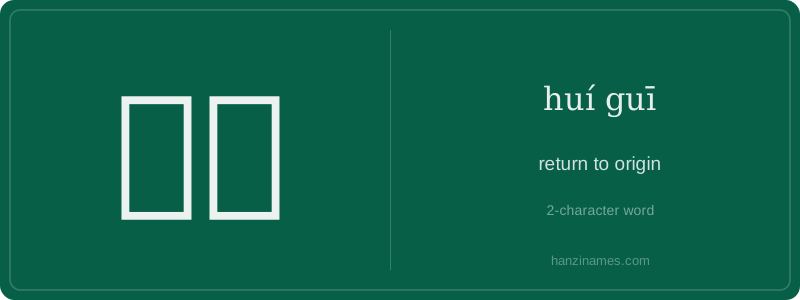
回归 refers to the act of returning to one's original place, state, or identity. It often carries a sense of reconnection or reintegration, especially in contexts such as politics, culture, or personal development. Unlike 'return,' which is more general, 回归 emphasizes a deeper, sometimes symbolic or emotional return.
The character 回 (huí) means 'to turn back' or 'to return,' while 归 (guī) means 'to return to one's home or origin.' Together, they form a compound that conveys the idea of coming back to where one belongs, whether physically, emotionally, or culturally.
回归 is commonly used in political contexts, such as the 'return of Hong Kong to China' (香港回归), and in personal narratives about rediscovering one's roots. It is also used metaphorically, like in 'the return of traditional values.' Understanding this term helps grasp the cultural emphasis on connection to heritage and identity in Chinese society.