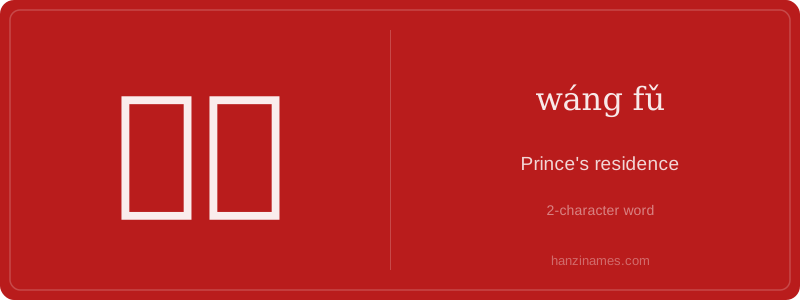
王府
How to Say
👀 0
How to Write
Meaning: Prince's residence
How to Understand
王府
王府 refers to the official residence or estate of a prince or high-ranking noble in ancient China. It is distinct from a palace, which is reserved for emperors, and often has historical or cultural significance.
The character 王 (wáng) means 'prince' or 'king,' while 府 (fǔ) means 'residence' or 'official house.' Together, they denote the dwelling place of a royal family member, especially during the feudal era.
Today, 王府 is often used in historical contexts or to describe traditional architecture. Famous examples include the Prince Gong's Mansion in Beijing, which now serves as a museum. It is also sometimes used metaphorically to describe a place of power or privilege.
Example Sentences
清朝时期的王府是皇室成员的住所。
The princes' residences in the Qing Dynasty were where royal family members lived.
那座古老的王府现在变成了一个文化中心。
That old prince's residence is now a cultural center.