专制
How to Understand
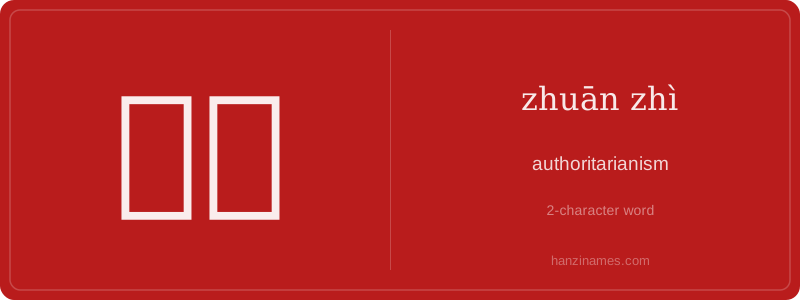
专制 (zhuān zhì) refers to a system of governance where power is concentrated in the hands of a single ruler or a small group, with little to no input from the general population. It emphasizes centralized control and often lacks democratic processes.
The character 专 (zhuān) originally meant 'special' or 'exclusive,' evolving to mean 'exclusive authority' or 'dominance.' 制 (zhì) means 'system' or 'institution.' Together, they form a term that describes a political system characterized by absolute authority.
专制 is commonly used in historical and political contexts to describe regimes that suppress dissent and maintain control through strict regulations. It is often contrasted with democracy and is an important concept in discussions about governance and human rights.