原先
How to Say
👀 0
How to Write
Meaning: Previously
How to Understand
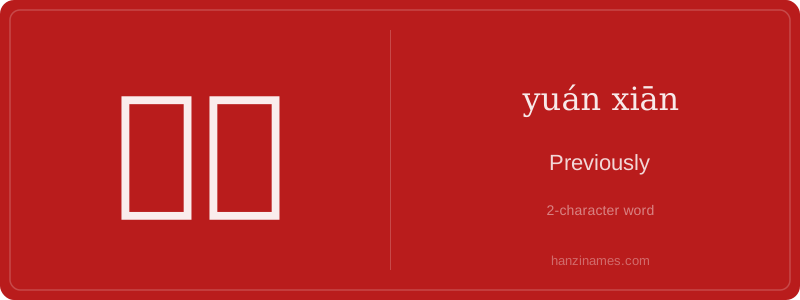
原先
原先 means 'previously' or 'at first', indicating something that happened or was the case before a certain point in time. It is often used to contrast with the present situation.
The character 原 (yuán) originally meant 'origin' or 'source,' and 先 (xiān) means 'before' or 'earlier.' Together, they form a compound that literally translates to 'original earlier' or 'previous.'
原先 is commonly used in both spoken and written Chinese to refer to past conditions, actions, or states. It can appear in news, literature, and everyday conversations to highlight changes over time. For example, it might be used when comparing what was once true to what is now true.
Example Sentences
他原先住在北京,但现在搬到了上海。
He previously lived in Beijing, but now moved to Shanghai.
这个计划原先有30人参加,但后来减少了。
The plan originally had 30 people participating, but later it decreased.