伤亡
How to Say
👀 0
How to Write
Meaning: casualties
How to Understand
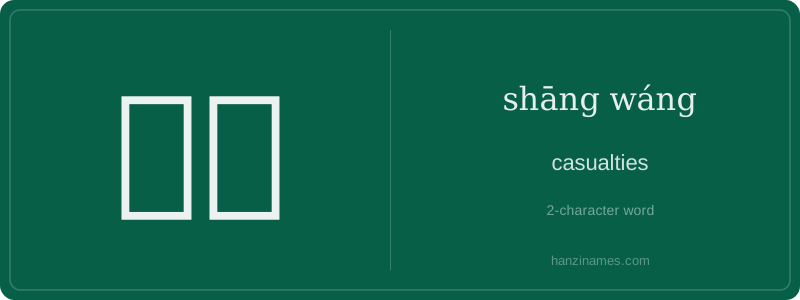
伤亡
伤亡 refers to the loss of life or injury, often used in contexts involving accidents, wars, or disasters. It emphasizes both death and injury, making it distinct from terms like 'death' or 'injury' alone.
The character 伤 (shāng) means 'injury' or 'wound,' while 亡 (wáng) means 'death' or 'to die.' Together, they form a compound that conveys the combined concept of casualties, including both deaths and injuries.
伤亡 is commonly used in news reports, official statements, and historical records to describe the impact of tragic events. It is a formal and neutral term, often used in media and government communications rather than in casual conversation.
Example Sentences
战争造成了许多伤亡。
The war caused many casualties.
地震后,救援队迅速赶到现场,以减少伤亡。
After the earthquake, the rescue team arrived quickly to reduce casualties.