所有者
How to Understand
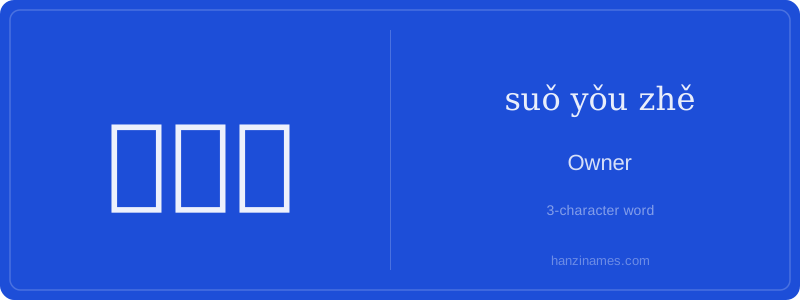
所有者 refers to the legal or rightful owner of something, such as property, a business, or an asset. It emphasizes the person who has legal control and rights over an item or entity, distinguishing it from mere users or operators.
The character 所 (suǒ) means 'place' or 'that which,' often used in compound words to indicate a relation or possession. 有 (yǒu) means 'to have' or 'to possess.' 者 (zhě) is a classifier that turns a verb or adjective into a noun, indicating a person or thing that does or is something. Together, 所有者 literally means 'the one who possesses.'
所有者 is commonly used in legal, business, and formal contexts. For example, in real estate, it refers to the legal owner of a property. In business, it may refer to shareholders or company owners. Understanding this term is essential for anyone dealing with Chinese legal or commercial documents.