摧毁
How to Understand
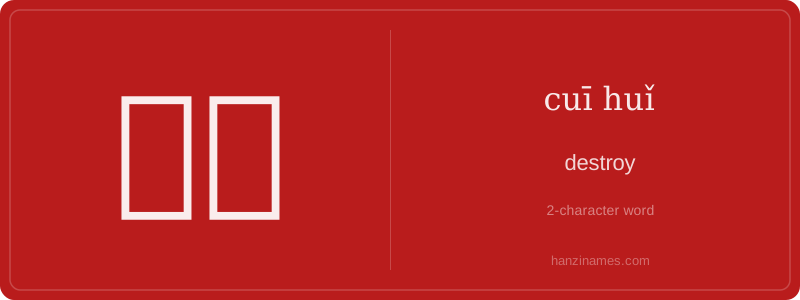
摧毁 means 'to destroy' or 'to demolish,' typically referring to the complete destruction of something, often with a sense of force or intensity. It is more commonly used in contexts involving physical destruction or metaphorical ruin, such as buildings, structures, or even ideas.
The character 摧 (cuī) originally meant 'to crush' or 'to break,' while 毁 (huǐ) means 'to destroy' or 'to ruin.' Together, they emphasize the act of completely breaking down or ruining something, often implying a more thorough and intentional destruction than similar terms like 破坏 (pòhuài), which can mean 'to damage' or 'to disrupt.'
摧毁 is frequently used in news reports, historical accounts, and literary works to describe the destruction of cities, monuments, or ideologies. It carries a strong tone and is not typically used in casual conversation. In modern Chinese, it can also be used metaphorically, such as when discussing the collapse of a system or belief.