毁
Character Story & Explanation
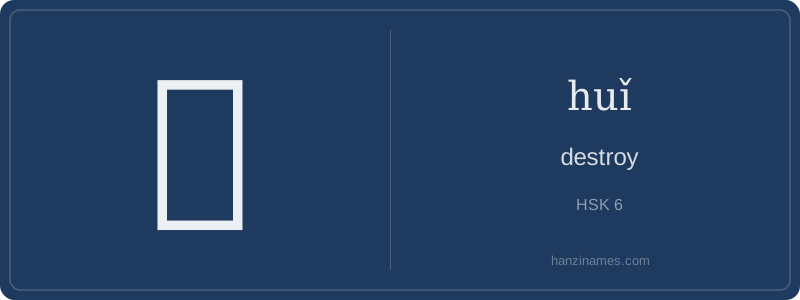
毁 is widely used in modern Chinese legal, media, and environmental discourse. It appears in official documents like the PRC Cybersecurity Law (Article 46), prohibiting acts that ‘damage or destroy’ (损害或毁坏) others’ reputations online. Common idioms include 自毁长城 (zì huǐ chángchéng, 'to destroy one’s own Great Wall'), a historical allusion to the wrongful execution of General Yue Fei — symbolizing self-sabotage of vital defenses. The phrase 毁于一旦 (huǐ yú yī dàn, 'ruined in one day') originates from Song dynasty writings describing sudden collapse of achievements.
The character’s form evolved from seal script, where 殳 (a hand holding a weapon-like object) combined with 卉 (an early variant of 厂 + 圭, suggesting collapse or breaking). While its oracle-bone origins are unattested, the modern structure clearly signals ‘striking down’ — consistent with documented usage since the Han dynasty in texts like the *Book of Han*, describing military campaigns that ‘destroyed enemy strongholds’ (毁其城).
The Chinese character 毁 (huǐ) conveys deliberate, often irreversible destruction — not mere damage, but the annihilation of integrity, reputation, or structure. Unlike English ‘break’ or ‘damage’, which can imply accident or partial harm, 毁 carries moral weight: it’s used for slander ruining a person’s name (毁谤), environmental devastation (毁林), or dismantling institutions. Its radical 殳 (shū), historically denoting a weapon or striking tool, reinforces agency and intent — destruction as an act, not an event.
In Western thought, ‘destroy’ often evokes physical obliteration (e.g., war, fire), while 毁 frequently operates in social or ethical domains. Consider ‘character assassination’ — English lacks a single verb with the precision of 毁谤 (huǐbàng). Similarly, ‘ruin’ in English may suggest passive decay (‘ruined by time’), whereas 毁 implies active, culpable intervention. This reflects Confucian emphasis on moral accountability: to 毁 someone’s reputation is a grave ethical breach.
Culturally, 毁 appears in legal, ecological, and digital contexts today — e.g., laws against online 毁誉 (hǔiyù, defamation), or policies targeting illegal forest 毁 (huǐ). It contrasts with Western individualistic framing of ruin (e.g., ‘self-destruction’) by foregrounding relational harm: one’s actions 毁 another’s standing within the community. This resonates with the classical concept of ‘face’ (miànzi), where social integrity is as tangible as material objects — and just as destructible.
Example Sentences
Common Compounds
Similar Characters — Don't Mix These Up
Your First Step into Chinese Culture: Get a Chinese Name
Every journey into Chinese begins with a name. Use our free Chinese name generator to create a meaningful, personalized Chinese name that fits you perfectly.
Get My Chinese Name →