部下
How to Understand
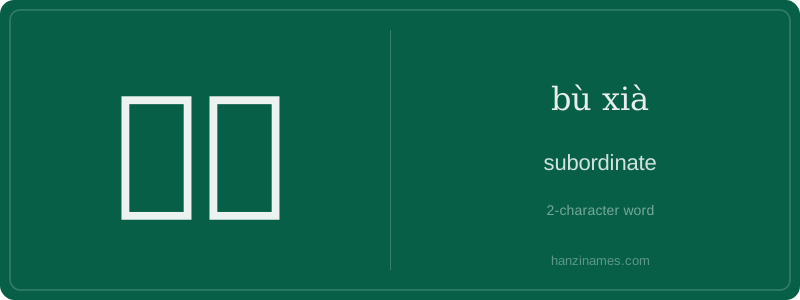
部下 (bù xià) refers to a subordinate or someone who is under the authority of another person, typically in a workplace or organizational setting. It is often used to describe employees or junior members within a hierarchy, and it carries a more formal tone than simpler terms like 'employee' or 'worker.'
The character 部 (bù) originally meant 'department' or 'section,' and it came to symbolize a group or organization. 下 (xià) means 'below' or 'under.' Together, they form a term that literally translates to 'those below' or 'those under,' emphasizing the hierarchical relationship.
In Chinese business and military contexts, 部下 is commonly used to refer to subordinates. It reflects traditional values of respect for authority and clear roles within an organization. A leader might speak of their 部下 with a sense of responsibility and care, highlighting the importance of leadership in Chinese culture.