征收
How to Understand
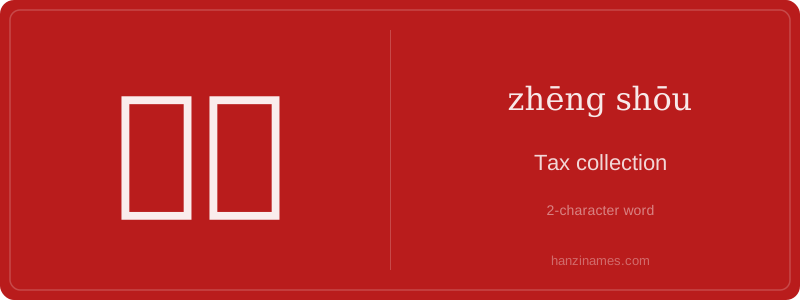
征收 refers to the act of collecting taxes or fees, typically by a government or authority. It is often used in official or legal contexts and emphasizes the formal process of gathering financial contributions from individuals or organizations.
The character 征 (zhēng) originally meant 'to mobilize' or 'to conscript,' but in this context, it conveys the idea of initiating or enforcing a requirement. 收 (shōu) means 'to collect' or 'to receive.' Together, they form a term that denotes the systematic gathering of money or resources.
征收 is commonly used in discussions about government policies, finance, and law. It is an essential term for understanding how states manage revenue and enforce financial obligations. In daily life, people may encounter this term when dealing with property taxes, income taxes, or other official charges.