不好意思
How to Understand
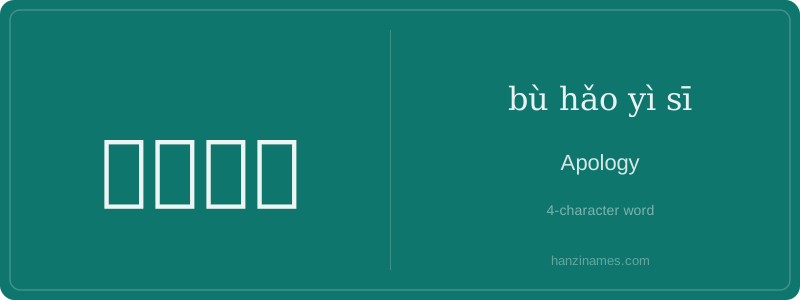
不好意思 is a common Chinese expression used to express apology or hesitation, often in a polite or modest way. It literally translates to 'not good idea' or 'not proper,' but it is commonly used to indicate that something is not appropriate or that the speaker is apologizing for an action or statement.
The characters are: 不 (bù) meaning 'not,' 好 (hǎo) meaning 'good,' 意 (yì) meaning 'idea' or 'intention,' and 思 (sī) meaning 'thought.' Together, they convey a sense of modesty or humility, as if the speaker is saying that their action or words may not be appropriate or well-received.
不好意思 is widely used in everyday conversations to express apologies, make excuses, or show politeness. It can also be used to downplay one's own achievements or actions. In cultural contexts, it reflects the value of modesty and respect in Chinese society, where people often avoid direct self-praise or confrontation.