拔出
How to Understand
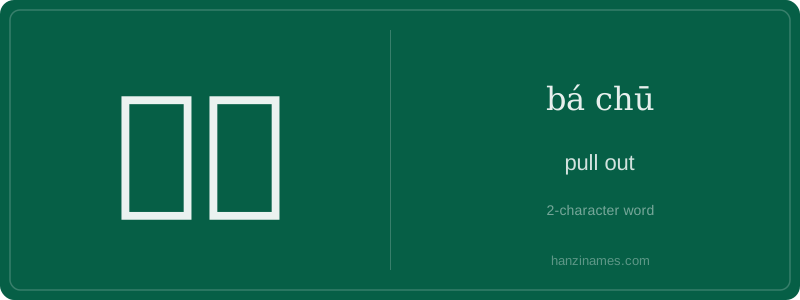
拔出 means 'to pull out' or 'to extract.' It refers to the action of removing something from a place, often physically, such as pulling a nail from a wall or extracting a tooth.
The character 拔 (bá) originally meant 'to pull' or 'to yank,' and 出 (chū) means 'to go out' or 'to emerge.' Together, they form a compound verb that emphasizes the act of forcibly removing something from its position.
拔出 is commonly used in daily situations like removing objects, extracting teeth, or even metaphorically, such as 'pulling out of a difficult situation.' It can also be used in more abstract contexts, like 'pulling out of a crisis.' The phrase is often used in both formal and informal settings, especially in instructions or descriptions of physical actions.