开出
How to Say
👀 0
How to Write
Meaning: issue out
How to Understand
开出
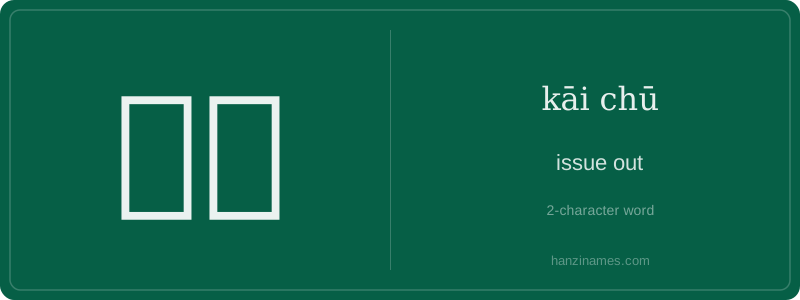
开出 is a verb that means 'to issue' or 'to produce,' often used in contexts such as issuing documents, tickets, or items. It can also mean 'to open up' or 'to create,' depending on the context.
The character 开 (kāi) means 'to open' or 'to start,' while 出 (chū) means 'to go out' or 'to emerge.' Together, they form a compound verb suggesting the action of producing or issuing something from within.
开出 is commonly used in formal and professional settings, such as when a bank issues a check or a hospital issues a medical report. It is also used in more abstract contexts, like 'to come up with an idea' or 'to present a solution.' Understanding this term helps learners grasp how Chinese combines simple characters into complex meanings.
Example Sentences
他需要开出一张支票来支付账单。
He needs to issue a check to pay the bill.
医生开出了一张处方药单。
The doctor issued a prescription for medication.