拾荒
How to Understand
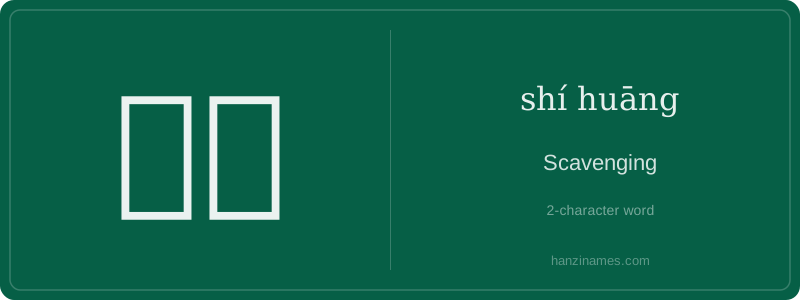
拾荒 refers to the act of collecting discarded or unused items, often for reuse or recycling. It is commonly associated with people who gather waste materials, such as paper, plastic, or metal, to sell or repurpose. This term highlights a practical and sometimes economically necessary activity in many communities.
The character 拾 (shí) means 'to pick up' or 'to collect,' while 荒 (huāng) originally meant 'wasteland' or 'abandoned land.' Together, they suggest the act of gathering things from neglected or discarded places. The combination reflects the idea of retrieving value from what others have thrown away.
拾荒 is often seen in urban areas where individuals, particularly those with limited resources, rely on scavenging for income. It is also linked to environmental awareness, as some scavengers focus on recycling. Understanding this term helps learners grasp both the economic and ecological aspects of daily life in Chinese-speaking regions.