耽误
How to Understand
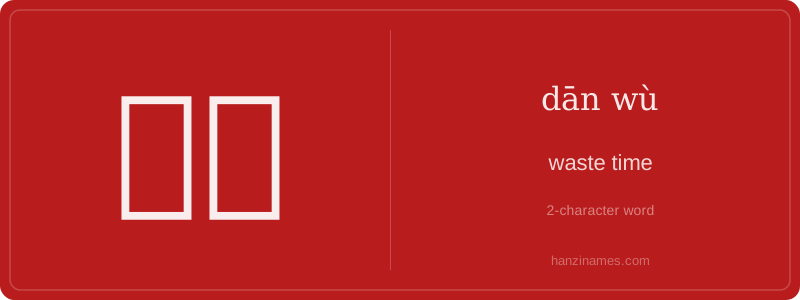
耽误 means to waste time or delay something, often implying that a task or opportunity is being missed due to procrastination or inefficiency. It differs from similar terms like 'delay' in that it carries a more negative connotation, suggesting unnecessary or avoidable loss of time.
The character 耽 (dān) originally meant to be absorbed or engrossed, while 误 (wù) means to mislead or make a mistake. Together, they convey the idea of being misled into wasting time or making an error in judgment about time management.
耽误 is commonly used in daily conversations to express frustration over unproductive behavior. It can also appear in formal contexts, such as business or academic settings, to emphasize the importance of efficiency and punctuality. A related expression is 耽搁 (dān gē), which has a similar meaning but is slightly more formal.