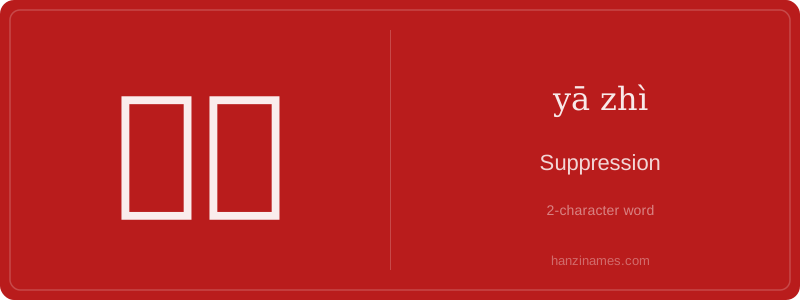
压制
How to Say
👀 0
How to Write
Meaning: Suppression
How to Understand
压制
压制 refers to the act of suppressing or controlling something, often through force or authority. It can imply limiting freedom, stifling expression, or preventing something from developing freely.
The character 压 (yā) means 'to press down' or 'to suppress,' while 制 (zhì) means 'to control' or 'to regulate.' Together, they form a term that emphasizes the act of imposing control over an idea, movement, or situation.
压制 is commonly used in political and social contexts, referring to actions taken by authorities to limit dissent or maintain order. It can also be used more generally to describe any form of restriction or control, such as in workplace or family settings.
Example Sentences
政府对言论自由的压制引发了国际关注。
The government's suppression of freedom of speech has drawn international attention.
他试图压制自己的情绪,但最终还是爆发了。
He tried to suppress his emotions, but finally broke down.