陈列
How to Understand
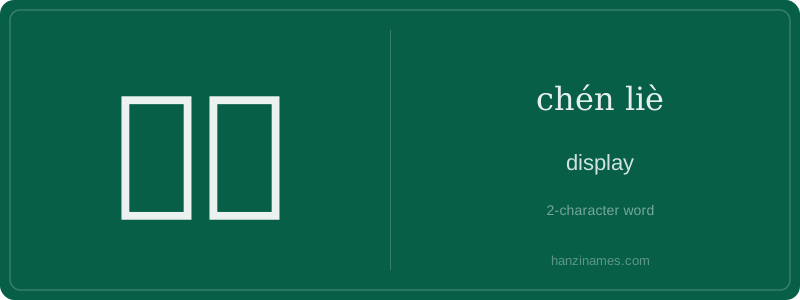
陈列 refers to the act of displaying or arranging items in a visible and organized manner, often for presentation or sale. It is commonly used in retail, museums, and exhibitions to describe how products or artifacts are arranged.
The character 陈 (chén) originally meant 'to arrange' or 'to display,' while 列 (liè) means 'to list' or 'to line up.' Together, they form a term that emphasizes the systematic arrangement of objects, highlighting order and visibility.
In daily use, 陈列 is often seen in stores, where products are carefully arranged to attract customers. It also appears in cultural contexts, such as museum exhibits, where artifacts are displayed to educate and engage visitors. Understanding 陈列 helps learners grasp the importance of visual organization in Chinese society.