翻
Character Story & Explanation
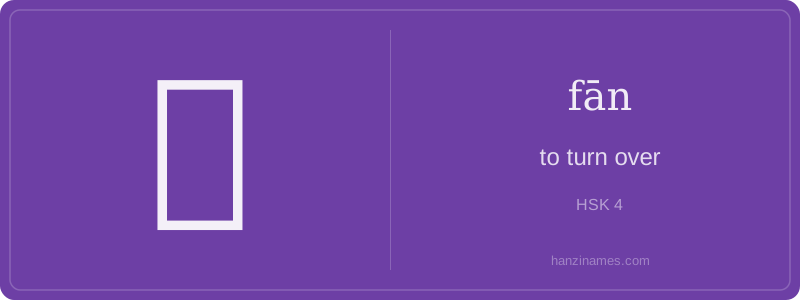
翻 is deeply embedded in modern Chinese life: it’s the verb in 翻译 (fānyì, 'translation') — literally 'turning across' languages — a term standardized in the early 20th century during China’s translation boom of Western science and literature. It also appears in common idioms like 翻来覆去 (fān lái fù qù, 'turn back and forth'), describing restless sleep or obsessive thinking, widely used in medical, psychological, and everyday contexts.
The character’s form dates to seal script (c. 3rd century BCE), where it combined 番 (a phonetic component meaning 'to rotate/turn') and 羽 (semantic, suggesting light, rapid motion). While not a pictograph of a physical object, its structure consistently conveyed dynamic reversal — confirmed by excavated bamboo slips from the Warring States period showing 翻 used for 'reversing decisions' and 'flipping records.'
Hi students! The character 翻 (fān) literally means 'to turn over' — like flipping a pancake, turning a page, or rolling over in bed. It’s an action verb with strong physical and metaphorical energy. Notice its radical 羽 (yǔ), meaning 'feather' or 'wings' — this hints at light, swift motion, like something fluttering or flipping through air. Though the radical might seem unexpected for 'turning', it reflects how ancient Chinese scribes associated quick, dynamic movement with winged things.
This character appears early in HSK Level 4 because it’s essential for describing change, reversal, and transformation — not just physically, but in language (translation), emotions (flipping moods), and even politics (overthrow). Its 18 strokes may look daunting, but break it down: left side is 番 (fān, 'turn, time period'), right side is 羽 (feathers). Practice writing it slowly, emphasizing the balanced symmetry of the feather component.
Remember: 翻 isn’t just about objects moving — it’s about *shifting perspective*. When you 翻书 (fān shū), you’re not just moving paper; you’re opening new knowledge. When you 翻脸 (fān liǎn), you ‘turn your face’ — instantly changing expression or attitude. This duality makes 翻 rich and very Chinese: simple action, deep implication. Use it to sound more natural and expressive — especially when describing sudden changes or layered meanings.
Example Sentences
Common Compounds
Similar Characters — Don't Mix These Up
Your First Step into Chinese Culture: Get a Chinese Name
Every journey into Chinese begins with a name. Use our free Chinese name generator to create a meaningful, personalized Chinese name that fits you perfectly.
Get My Chinese Name →