耐
Character Story & Explanation
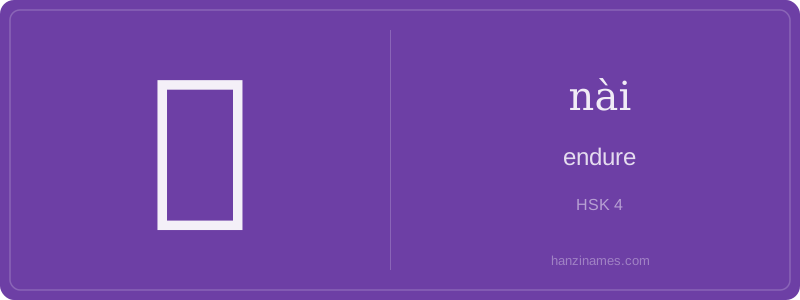
耐 is ubiquitous in contemporary Mandarin: it appears in the HSK-4 vocabulary list and features in key phrases like ‘耐心’ (nàixīn, patience) and ‘耐力’ (nàilì, stamina). A well-documented idiom is ‘耐人寻味’ (nài rén xún wèi), meaning 'provoking deep reflection'—used since at least the Qing dynasty in literary criticism to describe layered, subtle meaning that ‘bears’ repeated contemplation.
The character’s form evolved from seal script, where 而 (the radical, originally depicting a beard) combined with 寸 (cùn, a hand measure unit, indicating control or regulation). Though not pictographic, its structure suggests ‘measured endurance’—a documented semantic composition noted in authoritative sources like the *Kangxi Dictionary*. No oracle-bone inscriptions of 耐 exist; its earliest verified forms date to Warring States bamboo slips.
The character 耐 (nài) embodies a core Confucian and Daoist virtue: quiet resilience. Unlike Western ideals of triumph through force, Chinese philosophy prizes sustained patience—enduring hardship not as passive suffering, but as cultivated moral stamina. This reflects the worldview that true strength lies in continuity, like water wearing stone—not in explosive action, but in unwavering presence over time.
Historically, 耐 appears in classical texts such as the *Analects* and *Zhuangzi*, where endurance is linked to self-cultivation and ethical maturity. To ‘bear’ (耐) is not resignation—it’s conscious choice, aligned with harmony (和) and righteousness (义). This distinguishes it from mere tolerance; it implies active, dignified perseverance rooted in inner conviction.
In modern China, 耐 remains deeply embedded in social expectations—from students enduring years of exam preparation (高考耐力), to workers maintaining composure during economic shifts. It signals emotional intelligence and reliability. Calling someone ‘有耐性’ (yǒu nàixìng) is high praise: they possess the calm fortitude to navigate complexity without fracturing—a cultural ideal far more valued than impulsive decisiveness.
Example Sentences
Common Compounds
Similar Characters — Don't Mix These Up
Your First Step into Chinese Culture: Get a Chinese Name
Every journey into Chinese begins with a name. Use our free Chinese name generator to create a meaningful, personalized Chinese name that fits you perfectly.
Get My Chinese Name →