袋
Character Story & Explanation
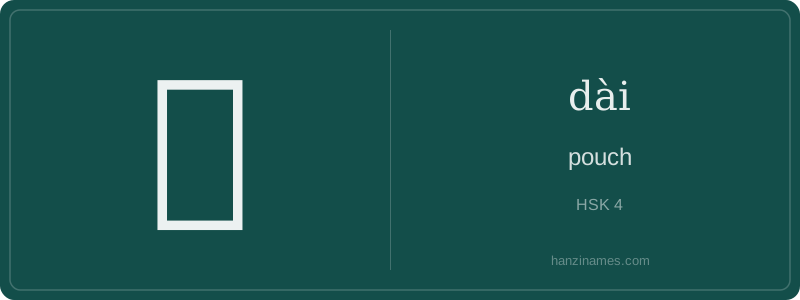
In daily life, 袋 is ubiquitous: shoppers say ‘请给我一个塑料袋’ (qǐng gěi wǒ yí gè sùliàodài) at supermarkets; pharmacies label ‘药袋’ (yào dài, medicine pouch); and students carry ‘书袋’ (shūdài, book bag) — though now more commonly called 书包 (shūbāo). A well-documented phrase is ‘口袋书’ (kǒudài shū, 'pocket book'), a genre formalized in the 1950s by China’s People’s Publishing House for affordable, portable classics.
The character’s form is not pictographic but phono-semantic: upper 衣 (clothing radical) signals material/function (fabric containers), lower 代 (dài) provides pronunciation. No oracle-bone or bronze inscriptions exist for 袋 — it first appeared in Han dynasty bamboo slips as a late-developing character for textile-based storage, reflecting the rise of woven goods in daily commerce.
The character 袋 (dài) evokes the humble yet indispensable pouch — a soft, flexible container woven into daily life across China. From plastic shopping bags at wet markets to cloth rice sacks in rural Henan, 袋 represents containment, portability, and practicality. Its radical 衣 (yī, 'clothing') hints at its origin: early pouches were made from fabric, often attached to garments or worn as waist bags — functional extensions of dress.
Visually, 袋 combines 衣 (clothing) on top with 代 (dài, 'generation' or 'substitute') below — not as semantic-phonetic pair in modern usage, but historically reflecting how pouches *substituted* for rigid containers. Though the bottom component now serves mainly as phonetic, the full character retains the tactile sense of something soft, foldable, and hand-held — unlike rigid 箱 (xiāng, 'box') or metallic 罐 (guàn, 'can').
In contemporary China, 袋 carries subtle cultural weight: reusable cloth bags are promoted under national eco-policies, while 'plastic bag bans' in cities like Shanghai (since 2008) transformed public behavior. The word appears in slogans like ‘减塑用袋’ ('reduce plastic, use bags') — where 袋 stands not just for object, but for conscious choice. It’s a quiet witness to shifting values around consumption and sustainability.
Example Sentences
Common Compounds
Similar Characters — Don't Mix These Up
Your First Step into Chinese Culture: Get a Chinese Name
Every journey into Chinese begins with a name. Use our free Chinese name generator to create a meaningful, personalized Chinese name that fits you perfectly.
Get My Chinese Name →