责
Character Story & Explanation
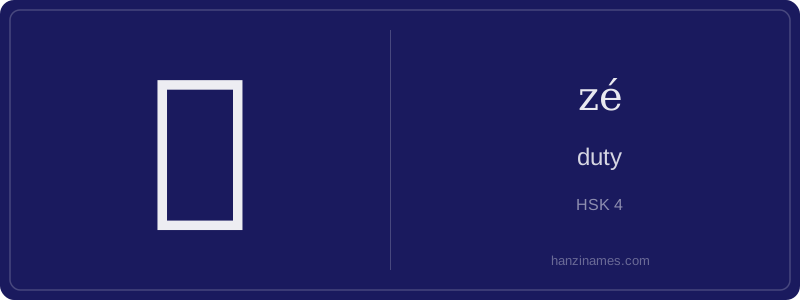
责 is widely used in modern Chinese legal, educational, and corporate contexts — for example, the official phrase ‘问责制’ (wèn zé zhì, 'accountability system') appears in government documents since the 2000s to describe mechanisms for holding officials responsible. It also appears in common idioms like ‘责无旁贷’ (zé wú páng dài, 'duty cannot be shifted to others'), cited in classical texts such as the *Book of Rites* (Liji) and still taught in schools today.
The character’s form evolved from seal script: the top part (朿) originally depicted a thorn or sharp object (symbolizing urgency or pressure), while the bottom 贝 reflects its early association with value-based obligation. Though not a pictograph, this structure reflects how duty was conceptualized — as something binding and valuable, not optional.
Hello students! The character 责 (zé) means 'duty', 'responsibility', or 'to blame' — depending on context. It’s an HSK Level 4 character, so you’ll see it often in intermediate textbooks and daily conversations. Notice its radical 贝 (bèi), meaning 'shell' — historically used as ancient currency. This hints that duty was once tied to obligations with material or moral 'value'. Mastering 责 helps you understand serious topics like ethics, work expectations, and personal accountability in Chinese culture.
Don’t confuse 责 with similar-sounding characters like 则 (zé, 'rule') or 择 (zé, 'to choose'). Its pronunciation is steady and level (first tone), and it appears in many compound words — especially those about social roles or consequences. When you hear phrases like ‘负责任’ (fù zérèn, 'to take responsibility'), you’re hearing 责 at work. Practice saying zé clearly — not 'ze' like 'zebra', but like 'dzuh' with a flat pitch.
This character carries weight — literally and culturally. In Confucian tradition, fulfilling one’s duties (责) toward family, ruler, and society is central to moral life. Today, it’s equally vital: teachers ‘问责’ (wèn zé, 'hold accountable'), companies issue ‘责任书’ (zérèn shū, 'responsibility agreements'), and parents remind kids ‘这是你的责任’ (Zhè shì nǐ de zérèn, 'This is your responsibility'). Understanding 责 opens doors to mature, nuanced communication — not just vocabulary, but values.
Example Sentences
Common Compounds
Similar Characters — Don't Mix These Up
Your First Step into Chinese Culture: Get a Chinese Name
Every journey into Chinese begins with a name. Use our free Chinese name generator to create a meaningful, personalized Chinese name that fits you perfectly.
Get My Chinese Name →