闹
Character Story & Explanation
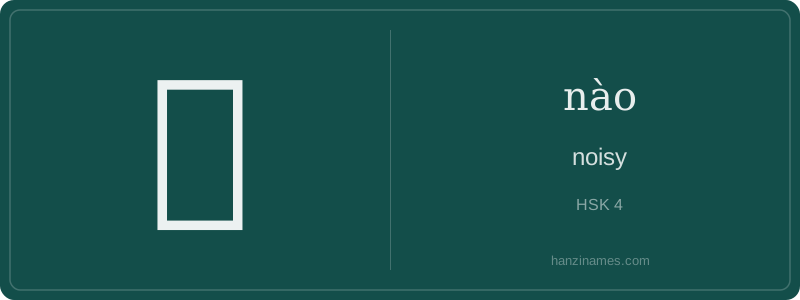
闹 appears frequently in modern Chinese life — from everyday expressions like 闹钟 (nàozhōng, 'alarm clock') to idioms like 闹得沸沸扬扬 (nào de fèifèi yángyáng, 'causing widespread commotion'). It’s documented in classical texts like the *Dream of the Red Chamber*, where 闹 used as a verb ('to stir up') reflects social tension or emotional outbursts. In contemporary media, headlines use 闹 to highlight scandals or viral incidents — e.g., '某明星因私事闹上热搜' ('A celebrity’s personal matter made trending topics').
The character evolved from seal script, where 门 frames 市 — not a pictograph but a phono-semantic compound: 门 indicates the 'gate' semantic field (entry/disruption), while 市 (shì) provides sound approximation and reinforces 'crowded/public space'. No oracle-bone form survives, but its structure consistently signals public, dynamic disturbance — exactly how Chinese speakers use it today: to describe anything from traffic jams to family squabbles.
Hi students! Let’s learn 闹 (nào), a vivid, energetic character meaning 'noisy', 'boisterous', or 'to cause a fuss'. It’s an HSK Level 4 word — common in spoken and written Chinese, especially when describing lively or disruptive situations. Though it looks simple (just 8 strokes!), its meaning goes beyond literal noise: it often implies emotional intensity, social disruption, or playful chaos — like kids laughing loudly in a park or neighbors arguing noisily.
The radical is 门 (mén, 'gate' or 'door'), which hints at movement, entry, or boundary-crossing — fitting for something that 'breaks the quiet' or 'bursts into a space'. The right side, 市 (shì), originally meant 'marketplace' — a historically bustling, crowded place full of sound and activity. So 闹 literally evokes the clamor of a busy market — a concrete, sensory image beginners can remember.
Don’t confuse nó with mere volume! While 'noisy' is the core definition, 闹 carries cultural nuance: it can be neutral (闹钟 — alarm clock), negative (闹事 — to cause trouble), or even affectionate (闹着玩 — teasing playfully). This flexibility makes it essential — and fun — to master. Pay attention to context, tone, and collocations to use it naturally, just like native speakers do.
Example Sentences
Common Compounds
Similar Characters — Don't Mix These Up
Your First Step into Chinese Culture: Get a Chinese Name
Every journey into Chinese begins with a name. Use our free Chinese name generator to create a meaningful, personalized Chinese name that fits you perfectly.
Get My Chinese Name →