默
Character Story & Explanation
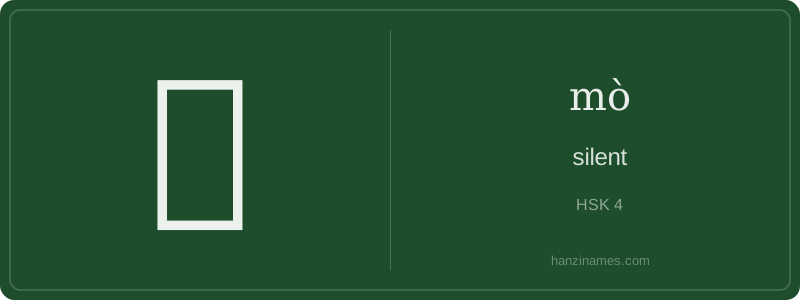
In daily life, 默 appears in standardized phrases like 默写 (mòxiě, 'dictation from memory')—a staple of Chinese primary education—and 默契 (mòqì, 'tacit understanding'), widely used in business and sports. The idiom 沉默是金 (chénmò shì jīn, 'silence is golden') has been documented since at least the Ming dynasty and remains common in media and advice columns. Historically, 默 was used in classical texts like the Book of Rites to describe reverent quiet before ritual.
The character’s form evolved from seal script, combining 黑 (black, implying depth/obscurity) and 犬 (dog, here serving phonetically as mò). No pictographic origin exists—it’s a semantic-phonetic compound. Today, Chinese people see 默 on classroom posters ('保持安静,默读课文'), in WeChat status updates ('今天选择默…'), and in headlines about diplomatic restraint—always signaling conscious, respectful silence.
Imagine stepping into a Beijing university library at noon—sunlight slanting through tall windows, students bent over textbooks, fingers hovering over keyboards. Not a cough, not a chair scrape breaks the hush. This isn’t just quiet; it’s 默 (mò): a deep, intentional silence rooted in respect, focus, and self-restraint. In Chinese culture, silence isn’t emptiness—it’s presence held in check, a cultivated inner stillness that signals seriousness and emotional maturity.
The character 默 carries weight beyond mere soundlessness. It appears in contexts demanding discipline: exam halls where cheating is unthinkable, meditation halls in Buddhist temples like Beijing’s Fayuan Temple, or even diplomatic settings where unspoken understanding matters more than words. Its radical 黑 (black) hints at depth, obscurity, and inwardness—silence as something substantial, not passive.
Unlike English ‘silent’, which often describes absence, 默 implies active choice—choosing not to speak, not to react, not to disturb. A teacher might say ‘请默读’ (qǐng mòdú)—‘please read silently’—not just to avoid noise, but to foster internal processing. That nuance makes 默 essential for HSK 4 learners: it reflects how language encodes cultural values, turning grammar into philosophy.
Example Sentences
Common Compounds
Similar Characters — Don't Mix These Up
Your First Step into Chinese Culture: Get a Chinese Name
Every journey into Chinese begins with a name. Use our free Chinese name generator to create a meaningful, personalized Chinese name that fits you perfectly.
Get My Chinese Name →