享
Character Story & Explanation
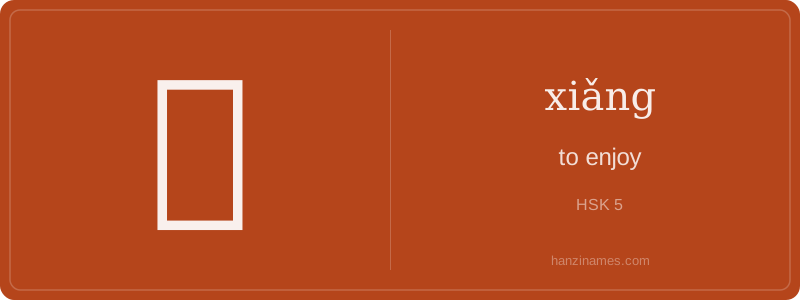
享 is widely used in formal, respectful contexts: in official documents (e.g., 享有权利 — ‘enjoy rights’), legal texts, and public discourse on welfare and citizenship. It appears in the PRC Constitution (Article 33: 中华人民共和国公民享有宪法和法律规定的权利 — ‘Citizens enjoy rights stipulated in the Constitution and laws’). Common idioms include 享尽天伦之乐 (xiǎng jìn tiān lún zhī lè, ‘fully enjoy familial bliss’) and 独享其成 (dú xiǎng qí chéng, ‘reap sole benefit’ — often with critical connotation).
Archaeologically, 享 evolved from Shang oracle-bone inscriptions depicting a sacrificial altar (亠 top + 亨 variant form), symbolizing ritual offerings presented to ancestors or deities. By the Warring States period, it standardized into its current form — retaining the upper roof-like radical 亠 (symbolizing reverence or canopy) and lower component representing a vessel or ceremonial platform, reflecting its origin in ancestral worship and shared ritual feasting.
The character 享 (xiǎng) embodies a profound Confucian and Daoist harmony between human aspiration and cosmic order — not mere hedonism, but the dignified, reciprocal enjoyment that arises from fulfilling one’s role: a ruler enjoying legitimacy through virtue, a child enjoying filial blessings through respect, or a scholar enjoying wisdom through disciplined study. Its elegance lies in implying that true enjoyment is earned, shared, and ritually grounded.
In classical Chinese thought, 享 never stands alone as selfish pleasure. It appears in ritual texts like the *Book of Rites* (Lǐjì) denoting offerings ‘enjoyed’ by ancestors — where ‘enjoyment’ is a sacred transaction: humans honor spirits with sincerity, and spirits reciprocate with protection and blessing. Thus, 享 encodes relational ethics: enjoyment flows only within moral reciprocity and social continuity.
This worldview contrasts sharply with individualistic notions of consumption. To ‘enjoy’ in Chinese is to participate — in family lineage, communal harmony, or cosmic balance. Even modern usage retains this resonance: when we say 享福 (xiǎng fú, ‘enjoy blessings’), it implies having cultivated virtue or endured hardship first. The character thus serves as a quiet cultural compass — reminding us that lasting joy is not taken, but received through integrity, gratitude, and belonging.
Example Sentences
Common Compounds
Similar Characters — Don't Mix These Up
Your First Step into Chinese Culture: Get a Chinese Name
Every journey into Chinese begins with a name. Use our free Chinese name generator to create a meaningful, personalized Chinese name that fits you perfectly.
Get My Chinese Name →