偷
Character Story & Explanation
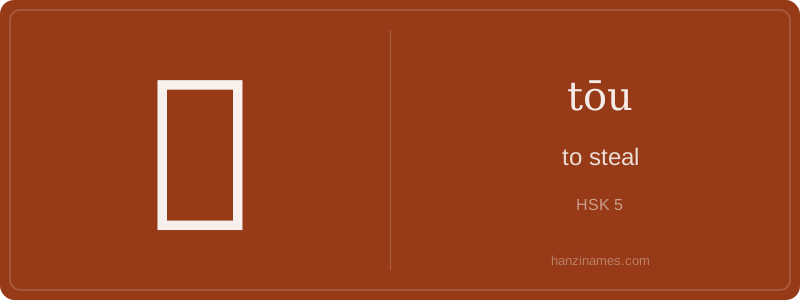
偷 is widely used in modern Mandarin in both literal and figurative senses. It appears in HSK 5 vocabulary lists and common phrases like 偷税 (tōu shuì, tax evasion) and 偷梁换柱 (tōu liáng huàn zhù, idiom meaning ‘substituting fraudulently’). Historically, the character appears in Ming-Qing vernacular novels (e.g., *Jin Ping Mei*) to describe petty theft and moral ambiguity among urban characters—reflecting real socioeconomic tensions of the era.
偷 is a phono-semantic compound: left radical 亻 (person) indicates human agency; right component 俞 (yú, originally meaning ‘to agree’ or ‘to pass through’) provides phonetic cue. While 俞’s meaning diverged, its pronunciation stabilized tōu. No oracle-bone or bronze script form survives; earliest attestation is in Han dynasty bamboo slips (2nd c. BCE), consistently used for unauthorized taking.
The Chinese character 偷 (tōu) means 'to steal'—but carries nuanced connotations beyond simple theft. Unlike English ‘steal’, which often implies criminal intent or legal violation, 偷 can appear in neutral or even playful contexts: ‘stealing a glance’ (偷看), ‘stealing time’ (偷懒), or ‘stealing a kiss’ (偷吻). This reflects how Chinese grammar and semantics allow verbs to be modified by context and measure words, softening moral judgment.
Western equivalents like ‘steal’ in English or ‘voler’ in French are predominantly negative and legally charged. In contrast, 偷 frequently appears in idioms and colloquial expressions where the act is metaphorical, non-material, or socially tolerated—e.g., 偷笑 (tōu xiào, ‘to giggle secretly’) implies harmless amusement, not malice. This linguistic flexibility reveals cultural emphasis on intention, relationship, and contextual propriety over rigid lexical morality.
Culturally, Confucian-influenced values prioritize harmony and face-saving; thus, labeling an action as 偷 doesn’t always trigger condemnation—it may signal discretion, cleverness, or gentle subversion. Compare this to Anglo-American legalistic framing, where ‘stealing’ activates immediate moral/legal binaries. Understanding 偷 requires reading tone, object, and social setting—not just dictionary definition—making it a rich case study in semantic pragmatics across cultures.
Example Sentences
Common Compounds
Similar Characters — Don't Mix These Up
Your First Step into Chinese Culture: Get a Chinese Name
Every journey into Chinese begins with a name. Use our free Chinese name generator to create a meaningful, personalized Chinese name that fits you perfectly.
Get My Chinese Name →