劳
Character Story & Explanation
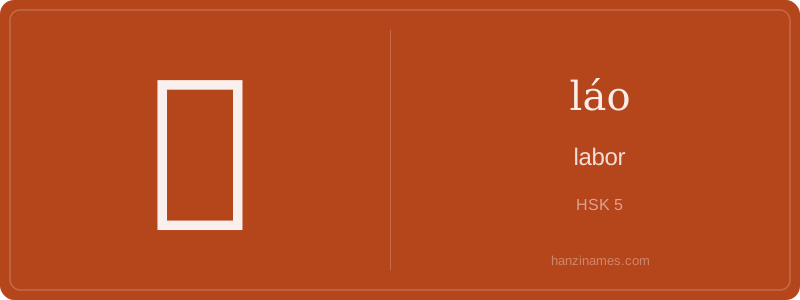
劳 is central to official and everyday language in China: it appears in Labor Day (劳动节, Láodòng Jié), celebrated annually on May 1st since 1949; in the Ministry of Human Resources and Social Security (formerly the Ministry of Labor); and in common idioms like 任劳任怨 (rèn láo rèn yuàn, 'willing to bear hardship and blame'). It's also in the foundational phrase 劳动人民 (láodòng rénmín, 'working people'), widely used in political and educational texts since the 1950s.
The character evolved from seal script, where its top part resembled two stacked 'fires' (indicating heat, exertion), and the bottom was 力 ('strength'). By the Han dynasty, it stabilized into its modern form. Though not a pictograph, its structure reflects ancient recognition of labor as physically taxing — verified in excavated bamboo slips and dictionaries like the Shuōwén Jiězì (100 CE).
Hello, learners! The character 劳 (láo) means 'to toil' or 'labor' — it captures the idea of hard, purposeful work. It’s built from two parts: the top is a simplified form of 炎 (yán, 'flame'), historically representing heat and exertion, and the bottom is 力 (lì), meaning 'strength' or 'power'. Together, they suggest effort that requires physical or mental energy. This character appears in formal, respectful, and sometimes bureaucratic contexts — never casual slang.
Don’t confuse 劳 with similar-looking characters like 牢 (láo, 'prison') or 捞 (lāo, 'to scoop up'). Its pronunciation is always láo (second tone) when used independently or in compounds like 劳动 (láodòng, 'labor'). As an HSK Level 5 character, you’ll encounter it in texts about society, economics, labor rights, or historical reforms — so it’s essential for understanding modern Chinese discourse on work and dignity.
Notice its stroke count: just 7 strokes, making it relatively simple to write — but its cultural weight is large. In China, 劳 carries positive connotations tied to socialist values: 'the dignity of labor' (劳动光荣, láodòng guāngróng) is a longstanding national slogan. Teachers, workers, and students all use this character respectfully — never dismissively. When you see 劳, think not just of 'work', but of contribution, responsibility, and social value.
Example Sentences
Common Compounds
Similar Characters — Don't Mix These Up
Your First Step into Chinese Culture: Get a Chinese Name
Every journey into Chinese begins with a name. Use our free Chinese name generator to create a meaningful, personalized Chinese name that fits you perfectly.
Get My Chinese Name →