劝
Character Story & Explanation
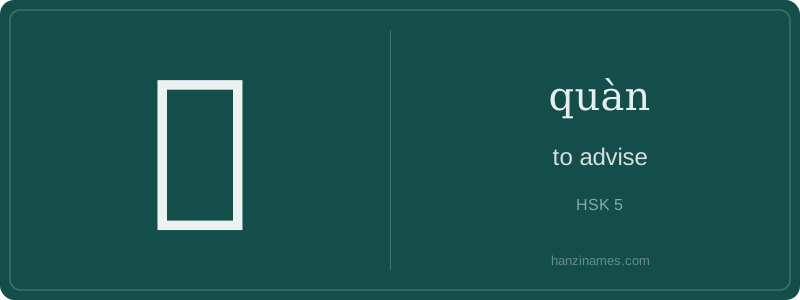
劝 appears frequently in modern Chinese media and daily speech — especially in health campaigns (e.g., 劝戒吸烟 'advise against smoking'), education initiatives, and family conversations. A well-documented phrase is 劝善惩恶 (quàn shàn chéng è), meaning 'encourage virtue and punish vice', cited in Ming-Qing dynasty moral texts and still used in official discourse today. It also features in the classic text Xunzi, where '劝学' ('Encouraging Learning') opens the book as a foundational essay on self-cultivation.
The character evolved from seal script (c. 3rd century BCE), where it clearly combined 又 (a hand gesture implying action) and 力 (effort). Archaeological inscriptions confirm its use in early bureaucratic documents advising rulers — confirming its core sense of earnest, responsible counsel has remained stable for over 2,000 years.
Hello students! The character 劝 (quàn) means 'to advise' or 'to persuade' — not just giving advice, but urging someone gently toward a better choice. It’s a Level 5 HSK character, so it appears in intermediate-to-advanced texts, especially in discussions about ethics, education, or social responsibility. Though simple (only 4 strokes), its meaning carries weight: it implies care, intention, and moral concern — not force, but respectful encouragement.
Notice the radical 力 (lì), meaning 'strength' or 'effort' — placed on the right side. This tells us that advising isn’t passive; it takes energy, sincerity, and active engagement. The left part, 又 (yòu), originally meant 'again' or 'also', suggesting repetition or reinforcement — like offering counsel more than once, with patience. Together, they form a vivid image: using your strength *repeatedly* to guide others well.
Unlike English ‘advise’, which can be neutral or formal, 劝 often implies urgency or concern — think of劝阻 (quàn zǔ, 'to dissuade') when stopping someone from danger, or 劝学 (quàn xué, 'to encourage study'), a Confucian ideal. It’s rarely used for trivial suggestions. As you learn it, remember: 劝 is warm, purposeful, and deeply human — rooted in China’s long tradition of benevolent guidance and mutual care.
Example Sentences
Common Compounds
Similar Characters — Don't Mix These Up
Your First Step into Chinese Culture: Get a Chinese Name
Every journey into Chinese begins with a name. Use our free Chinese name generator to create a meaningful, personalized Chinese name that fits you perfectly.
Get My Chinese Name →