吹
Character Story & Explanation
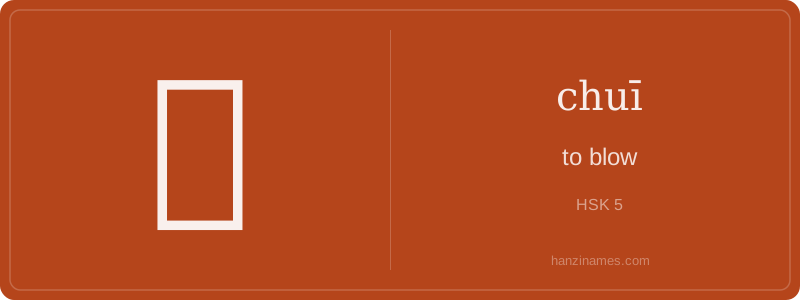
In daily life, 吹 is ubiquitous: parents tell children ‘吹一吹’ (chuī yī chuī) to cool hot food; musicians study 吹奏 (chuīzòu, ‘wind instrument performance’) for decades; and in business slang, 吹嘘 (chuīxū) means ‘to hype up’ — a nod to how easily breath becomes inflated rhetoric. A famous idiom is 吹毛求疵 (chuī máo qiú cī), literally ‘blow on hair to find flaws’, meaning ‘to nitpick’ — documented since the Han dynasty in texts like *Han Feizi*.
Graphically, 吹 is a phono-semantic compound: 口 (kǒu, ‘mouth’) signals meaning (oral action), while 欠 (qiàn, ‘to yawn’ or ‘lack’) provides phonetic cue (chuī shares ancient rhyme group with qiàn). It first appeared in seal script (~3rd c. BCE) — not as a pictograph, but as a logical combination reflecting speech-related verbs.
At first glance, 吹 (chuī) means 'to blow' — air moving from mouth or wind — but in Chinese worldview, breath is inseparable from life force (qì). The radical 口 (mouth) anchors the character in human agency: blowing isn’t passive weather; it’s an intentional act of exhaling, playing music, cooling soup, or even inflating meaning. This reflects a deep Confucian and Daoist sensibility: small physical acts carry moral or energetic weight.
Historically, 吹 appears in early texts like the *Zhuangzi*, where 'blowing like the wind' symbolizes effortless action (wúwéi). It also features in medical classics describing qì circulation — to ‘blow’ is to regulate internal energy. Unlike English ‘blow’, which can be violent or dismissive (‘blow off’), 吹 retains neutrality or even reverence: blowing incense, blowing a flute, blowing on hot tea are all mindful, embodied practices.
The character invites reflection on voice and influence. In modern usage, 吹 can mean ‘to boast’ (e.g., 吹牛 — ‘blow ox’, i.e., exaggerate), revealing how breath expands into speech, and speech into social performance. Yet this too echoes classical thought: just as wind scatters leaves, unchecked words scatter truth. Thus 吹 embodies a cultural calibration — between breath and responsibility, air and authenticity, sound and sincerity.
Example Sentences
Common Compounds
Similar Characters — Don't Mix These Up
Your First Step into Chinese Culture: Get a Chinese Name
Every journey into Chinese begins with a name. Use our free Chinese name generator to create a meaningful, personalized Chinese name that fits you perfectly.
Get My Chinese Name →