呆
Character Story & Explanation
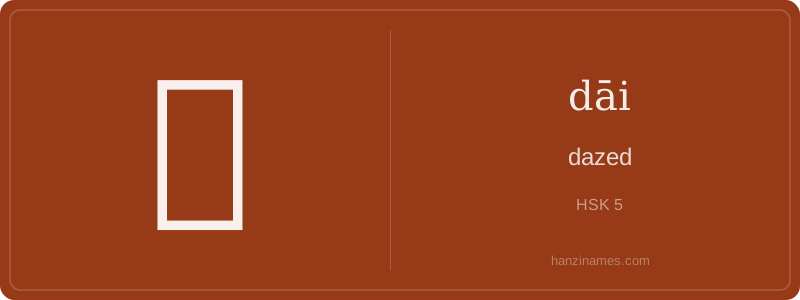
呆 has been used since at least the Ming and Qing dynasties in vernacular literature to describe vacant or bewildered expressions. In modern usage, it appears frequently in spoken Mandarin, internet forums, and subtitles for dramas and animations. A well-documented phrase is 呆若木鸡 (dāi ruò mù jī), meaning 'stunned like a wooden chicken' — an idiom from the Zhuangzi (c. 4th century BCE) describing a state of profound stillness and focus, later reinterpreted as 'dumbfounded'. Today, it’s commonly used playfully among young people.
The character is not pictographic in origin — its form evolved from ancient variants of 口 (mouth) combined with a simplified upper component. The current shape (口 + 杏 without the top dot) reflects standardization in the 20th century. In daily life, Chinese speakers use 呆 most often to describe facial expressions: eyes wide, mouth slightly open, no reaction — like someone seeing their crush walk by or hearing unexpected exam results.
Hi students! Let’s look at 呆 (dāi) — a character that looks simple but carries rich nuance. It’s pronounced with the first tone, and though it literally means 'foolish' or 'stupid', it’s rarely harsh or insulting in modern speech. Instead, it often describes a gentle, blank, or dazed expression — like someone staring into space after waking up or being stunned by surprising news. Think of it as ‘zombie-mode’ rather than ‘idiot’ — affectionate, not aggressive.
This character is especially common in spoken Mandarin and internet slang. You’ll hear it in phrases like 呆住了 (dāi zhù le) — 'frozen in shock' — used when someone is speechless from surprise, embarrassment, or awe. It’s also widely used in anime/manga fan communities (thanks to Japanese influence), where 呆萌 (dāi méng) — 'dazed-cute' — describes an endearing, clueless-but-adorable look.
Don’t confuse 呆 with formal academic vocabulary — it’s colloquial, vivid, and emotionally expressive. At HSK Level 5, you’ll encounter it in intermediate listening and reading materials, especially dialogues involving reactions, emotions, or light humor. Mastering 呆 helps you sound more natural and culturally tuned-in — because real Chinese isn’t just about grammar; it’s about how people *feel* and *react* in everyday moments.
Example Sentences
Common Compounds
Similar Characters — Don't Mix These Up
Your First Step into Chinese Culture: Get a Chinese Name
Every journey into Chinese begins with a name. Use our free Chinese name generator to create a meaningful, personalized Chinese name that fits you perfectly.
Get My Chinese Name →