厦
Character Story & Explanation
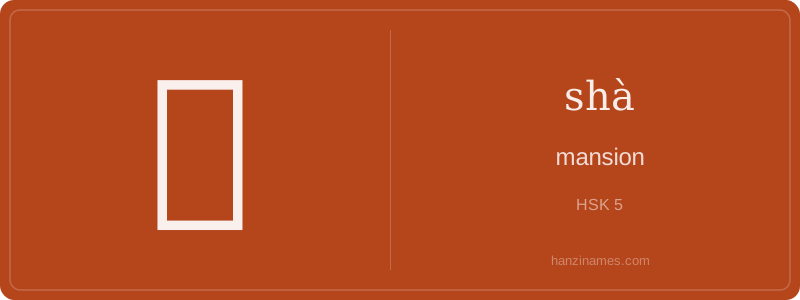
厦 is rarely used alone in modern Mandarin; it appears almost exclusively in compound words like 厦门 (Xiàmén), the coastal city in Fujian Province whose name dates to the Ming Dynasty (1368–1644), referencing a fortified gatehouse complex. It also appears in formal or literary contexts: e.g., ‘广厦’ (guǎngshà, ‘spacious mansion’) in Du Fu’s Tang poem ‘The Thatched Hut Destroyed by Autumn Winds’, symbolizing shelter for all scholars and commoners alike—a Confucian ideal of inclusive benevolence.
The character is not pictographic; its origin is semantic-phonetic (形声字). The 厂 radical indicates ‘structure/shelter’, while 下 (xià, ‘below’) originally served as phonetic component—though pronunciation shifted over time. Today, Chinese learners encounter it most often in geography (Xiamen) or classical quotations—not daily conversation.
The character 厦 (shà) evokes China’s layered architectural philosophy—where verticality signals prestige, but not merely for display. Unlike Western skyscrapers that emphasize individual dominance over skyline, traditional Chinese ‘tall buildings’ were communal spaces: ancestral halls, scholar-official residences, or merchant guild headquarters where hierarchy, lineage, and ritual coalesced under one roof. The radical 厂 (cliff/shelter) hints at protective enclosure—not just physical shelter, but social sanctuary.
Historically, ‘shà’ was never neutral real estate; it carried moral weight. A well-kept 厦 reflected virtue, frugality, and filial responsibility—its grandeur justified only when serving family continuity or public function. This contrasts with modern ‘luxury apartments’, revealing how Chinese worldview ties architecture to ethics: a building is judged by who it shelters and for what purpose.
Even today, the word retains quiet gravitas. It appears in place names like Xiamen (厦门, ‘Lower Gate Mansion’)—a port city named for its fortified coastal stronghold—and in literary registers to evoke dignity, stability, and rootedness. To call something a 厦 is to honor its enduring presence, not just its height—a subtle reminder that in Chinese thought, true stature grows from foundation, not altitude.
Example Sentences
Common Compounds
Similar Characters — Don't Mix These Up
Your First Step into Chinese Culture: Get a Chinese Name
Every journey into Chinese begins with a name. Use our free Chinese name generator to create a meaningful, personalized Chinese name that fits you perfectly.
Get My Chinese Name →