愁
Character Story & Explanation
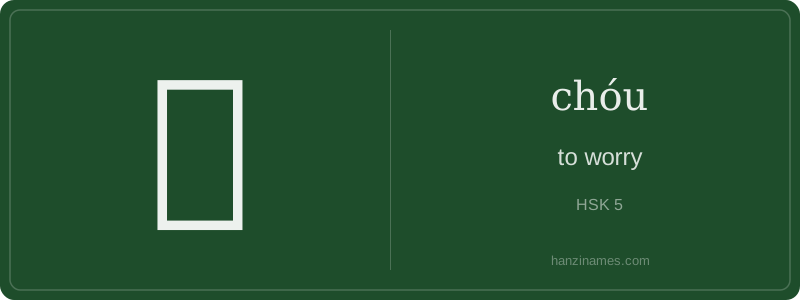
愁 appears frequently in modern Mandarin in phrases like 别愁 (Bié chóu, 'Don’t worry') — a common reassurance in daily conversation — and in fixed idioms such as 愁眉苦脸 (chóuméikǔliǎn, 'worried eyebrows and bitter face'), documented since the Ming dynasty in texts like The Plum in the Golden Vase. It’s also central to classical poetry: Du Fu wrote '白头搔更短,浑欲不胜簪' — though 愁 isn’t visible there, his famous 'worry about the nation' theme relies on this lexical root.
The character’s form is not pictographic but phono-semantic: the top 秋 (qiū) provides sound (historically closer to *chōu*), while the bottom 心 (xīn) signals meaning ('heart/emotion'). This structure was standardized in the Han dynasty’s Shuōwén Jiězì dictionary — no oracle bone origins; it emerged later as a compound character reflecting literati sensibility toward introspective sorrow.
Hi students! The character 愁 (chóu) means 'to worry about' or 'to feel anxious' — it’s an emotional verb describing a deep, lingering concern, not just momentary stress. It’s written with 13 strokes and belongs to the 心 (xīn, 'heart') radical, which tells us this feeling originates from the heart/mind in Chinese thought. At HSK Level 5, you’ll see it in more mature expressions — like worrying about exams, family health, or life decisions. Don’t confuse it with casual words for 'stress'; 愁 carries poetic weight, often appearing in literature and formal speech.
This character is commonly used as a verb ('I worry') or adjective ('a worried look'), but never as a noun by itself — you need compounds like 愁绪 (chóuxù, 'worried feelings') for that. Its tone is third (chóu), so practice saying it with a falling-then-rising pitch — like asking 'Huh?' but with seriousness. Try pairing it with time words: 最近我很愁 (Zuìjìn wǒ hěn chóu, 'Lately I’ve been very worried').
Remember: 愁 isn’t about panic or anger — it’s quiet, internal, and often tied to responsibility or care. Think of a parent worrying silently about their child’s future, or a student staring at a difficult textbook. That soft, heavy feeling? That’s 愁. In writing, notice how the top part (秋 qiū, 'autumn') combines with 心 — historically, autumn symbolized decline and reflection in Chinese poetry, making it a fitting visual metaphor for melancholy worry.
Example Sentences
Common Compounds
Similar Characters — Don't Mix These Up
Your First Step into Chinese Culture: Get a Chinese Name
Every journey into Chinese begins with a name. Use our free Chinese name generator to create a meaningful, personalized Chinese name that fits you perfectly.
Get My Chinese Name →