挣
Character Story & Explanation
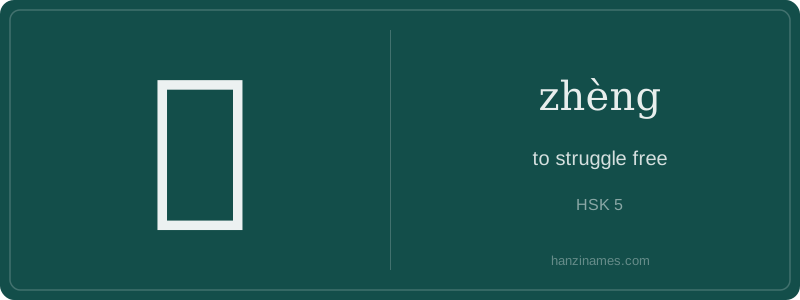
挣 is widely used in contemporary Mandarin to express effortful acquisition—especially money (挣工资, ‘earn wages’) and liberation (挣脱, ‘break free’). It appears in the common idiom 挣扎 (zhēngzhá, ‘to struggle’), documented in modern literature since the early 20th century, including Lu Xun’s essays describing societal upheaval. In economic discourse, 挣 is central to phrases like 挣钱 (‘make money’), reflecting post-reform China’s emphasis on self-reliant livelihood.
The character is a phono-semantic compound: 扌 (hand radical) indicates action, and 争 (zhēng) provides both sound and semantic weight—‘contending’ reinforces the idea of active, competitive effort. No oracle-bone or bronze script form survives; it first appears in seal script (c. 3rd century BCE) as a standardized compound, confirming its origin in Warring States–era linguistic consolidation.
The character 挣 (zhèng) embodies a profound cultural truth: freedom is rarely granted—it is wrested through persistent, embodied effort. Its hand radical (扌) signals agency and physical action, while the phonetic component 争 (zhēng, 'to contend') adds urgency and conflict. This reflects the Confucian-tinged Chinese worldview where moral and material advancement demands active striving—not passive waiting. Struggle isn’t failure; it’s the necessary friction of growth.
In Chinese philosophy, ‘struggling to get free’ isn’t just physical—it’s liberation from ignorance, poverty, or social constraint. The character appears in contexts ranging from escaping ropes to breaking free of debt or outdated thinking. Unlike Western individualism that often frames freedom as inherent rights, 挣 implies earned autonomy: dignity forged in resistance, resilience validated by outcome.
This nuance permeates modern life: migrant workers ‘挣工资’ (earn wages) not just with labor, but with sacrifice; students ‘挣分数’ (strive for scores) amid fierce competition; even AI ethics debates use 挣 to describe societies ‘struggling to free themselves’ from algorithmic determinism. 挣 thus encodes a quiet optimism—freedom is arduous, yes—but always within reach of disciplined will.
Example Sentences
Common Compounds
Similar Characters — Don't Mix These Up
Your First Step into Chinese Culture: Get a Chinese Name
Every journey into Chinese begins with a name. Use our free Chinese name generator to create a meaningful, personalized Chinese name that fits you perfectly.
Get My Chinese Name →