椅
Character Story & Explanation
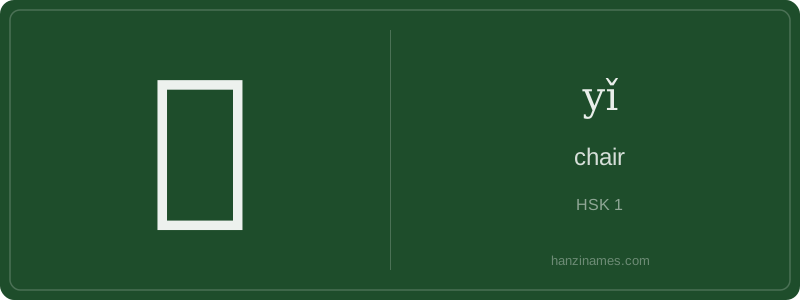
椅 appears frequently in modern Chinese life—from classroom instructions (‘请坐到椅子上’) to office supply catalogs and public transport signage (‘请为老弱病残孕让座’). It’s central in common compounds like 椅子 (yǐzi, ‘chair’) and 轮椅 (lún yǐ, ‘wheelchair’), and appears in official documents, accessibility standards, and school safety guidelines. Historically, the earliest confirmed written use of 椅 dates to the Tang dynasty (618–907 CE), appearing in texts describing foreign-style seating imported from Central Asia, later standardized during the Song dynasty as domestic furniture evolved.
The character is a phono-semantic compound: 木 (mù, ‘tree/wood’) as semantic radical signals material origin, while 奇 (qí, ‘strange; outstanding’) serves as the phonetic component—though pronunciation shifted from *qí to yǐ over centuries due to Middle Chinese sound changes. No oracle-bone or bronze inscriptions contain 椅; it emerged later as a specialized term for newly adopted furniture.
The character 椅 (yǐ) embodies the quiet dignity of everyday objects in Chinese philosophy—where utility and harmony coexist. Its radical 木 (wood) roots it in nature, reflecting the traditional preference for wooden furniture in pre-modern China, where chairs were not just seats but markers of status, posture, and social order. Unlike Western chairs that emphasize individual comfort, classical Chinese chairs—like the Ming dynasty ‘yǐ’—were designed for upright stillness, aligning with Confucian ideals of self-discipline and respectful presence.
Historically, the chair itself was a late arrival in China; early Han and Tang elites sat on mats or low platforms. Only after cultural exchange via the Silk Road and Central Asian influences did elevated seating gain prominence during the Song and especially Ming dynasties. The character 椅 thus carries layered time: its form speaks of wood and craft, while its usage chronicles a shift from floor-sitting to seated hierarchy—a subtle revolution in bodily practice and social space.
This character invites reflection on how language encodes worldview: 椅 is not merely ‘a thing to sit on’, but a node linking material culture, bodily discipline, and relational ethics. In modern classrooms, offices, and homes, every use of 椅 echoes centuries of craftsmanship and etiquette—reminding users that even ordinary objects participate in the Confucian project of cultivating virtue through daily habit and mindful placement.
Example Sentences
Common Compounds
Similar Characters — Don't Mix These Up
Your First Step into Chinese Culture: Get a Chinese Name
Every journey into Chinese begins with a name. Use our free Chinese name generator to create a meaningful, personalized Chinese name that fits you perfectly.
Get My Chinese Name →