描
Character Story & Explanation
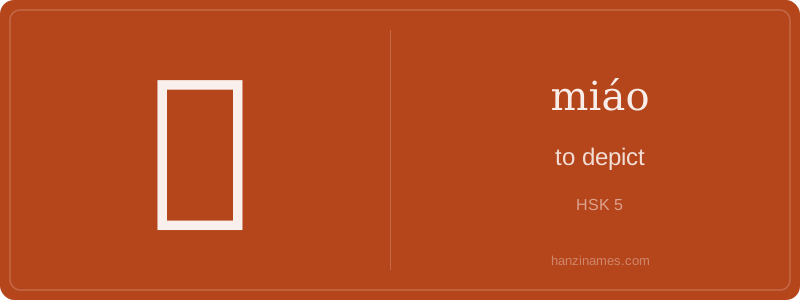
描 appears frequently in modern Chinese across art education, journalism, and literature. Common phrases include 描绘 (miáohuì, 'to portray') and 白描 (báimiáo, 'plain description'—a classical literary technique emphasizing unadorned, precise language). The idiom 细描细写 (xì miáo xì xiě, 'describe in minute detail') is used in writing pedagogy and film criticism. Historically, 描 was standard in Song-Yuan dynasty painting manuals, where masters taught students to 描骨 (miáo gǔ, 'trace bone structure') before adding ink wash.
The character evolved from seal script, where 扌 (hand) combines with 苗 (miáo, sprout)—a phonetic component adopted during Qin-Han standardization. While 苗 isn’t semantic here, its association with growth subtly reinforces the idea that depiction cultivates understanding. Today, Chinese art teachers still instruct students: '先描后画' (xiān miáo hòu huà)—'sketch first, then paint'—emphasizing foundational precision.
The character 描 (miáo) embodies the Chinese cultural reverence for precise, intentional representation—not mere copying, but thoughtful articulation of essence. Its hand radical (扌) signals active human agency: depiction is a deliberate, embodied act, not passive observation. In classical painting and calligraphy theory, 'describing' meant capturing the spirit (shén) through form—revealing how Chinese aesthetics values inner truth over photographic fidelity.
This worldview reflects Confucian and Daoist harmony: the hand (action) meets the 'target' component (苗, miáo—originally 'sprout', here phonetic but evoking growth and potential). To 描 is thus to nurture understanding—to trace not just lines, but meaning, intention, and resonance. It implies responsibility: how one depicts shapes perception, ethics, and memory.
In modern usage, 描 continues this ethos—whether sketching a portrait or 'depicting' social reality in literature. It resists abstraction without grounding; even digital illustration apps in China use 描线 (miáoxiàn, 'line-tracing') as a core function. The character quietly affirms that seeing, rendering, and interpreting are inseparable moral and aesthetic acts—central to China’s enduring tradition of literati expression.
Example Sentences
Common Compounds
Similar Characters — Don't Mix These Up
Your First Step into Chinese Culture: Get a Chinese Name
Every journey into Chinese begins with a name. Use our free Chinese name generator to create a meaningful, personalized Chinese name that fits you perfectly.
Get My Chinese Name →