摩
Character Story & Explanation
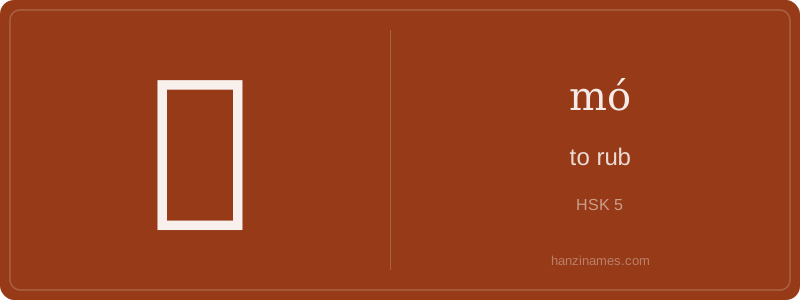
摩 appears frequently in modern Chinese life — most notably in 按摩 (ànmó, 'massage'), a widely practiced health and relaxation tradition across China and the Sinophone world. The term is so common that licensed 'massage therapists' are regulated by China’s Ministry of Human Resources, and 'foot massage parlors' (足疗) are ubiquitous in cities. Historically, 摩 entered Chinese via Buddhist translations (e.g., 摩诃, móhē, from Sanskrit 'maha'), but its core meaning 'to rub' predates that and is well attested in classical texts like the Shuōwén Jiězì (121 CE), which defines it as 'to rub repeatedly.'
The character’s form combines 手 (hand) on the left and 麻 (hemp, implying rough texture or numbness) on the right — a semantic-phonetic compound. 麻 gives both sound (mó) and hints at tactile sensation (e.g., 'pins and needles'), reinforcing the idea of surface contact and stimulation.
Hi students! Let’s explore 摩 (mó), a Level 5 HSK character meaning 'to rub' — but it’s much richer than that. It’s not just physical rubbing like polishing a table; it often implies gentle, repeated contact with purpose: massaging muscles, polishing metal, or even metaphorically 'rubbing shoulders' with people — meaning to interact closely. Notice its radical 手 (hand) — that tells us the action is done *with the hands*. This helps you remember it’s about tactile, intentional touch.
Don’t confuse 摩 with similar-sounding characters like 模 (model) or 磨 (to grind). While all three share the 'mó' pronunciation, their radicals and meanings differ sharply. 摩 always carries a sense of surface contact, friction, or closeness — whether literal (rubbing lotion on skin) or figurative (a bustling city where people constantly brush past each other).
At HSK 5, you’ll meet 摩 in compound words like 摩擦 (mócā, 'friction') and 按摩 (ànmó, 'massage'). These aren’t just vocabulary items — they reflect real-life Chinese experiences: workplace tensions (人际摩擦), wellness culture (足底按摩), or even tech terms like 摩托车 (motuōchē, 'motorcycle', from 'motor' + 'vehicle'). Understanding 摩 opens doors to nuanced expressions of contact, conflict, and care.
Example Sentences
Common Compounds
Similar Characters — Don't Mix These Up
Your First Step into Chinese Culture: Get a Chinese Name
Every journey into Chinese begins with a name. Use our free Chinese name generator to create a meaningful, personalized Chinese name that fits you perfectly.
Get My Chinese Name →