撕
Character Story & Explanation
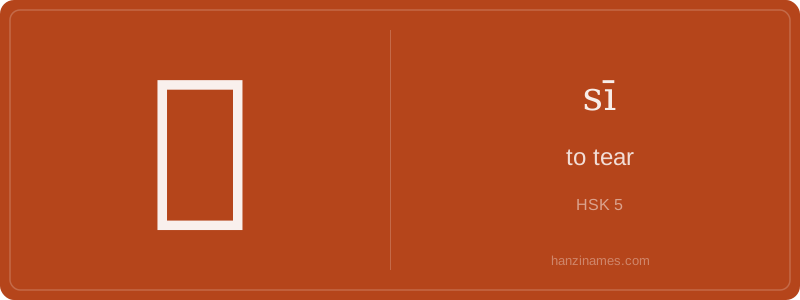
撕 is widely used in modern Chinese for both physical and metaphorical tearing. Common phrases include 撕发票 (sī fāpiào, 'to tear off an invoice receipt') — required for many official reimbursements — and 撕心裂肺 (sī xīn liè fèi, 'tear one’s heart and rupture one’s lungs'), a documented idiom since the Ming dynasty meaning 'agonizing grief'. It also appears in legal contexts: 撕毁合同 (sīhuǐ hétong, 'to tear up/repudiate a contract').
The character is not pictographic; its earliest attested form appears in clerical script (Lìshū) during the Han dynasty. The right-side component 斯 was added for phonetic value, not meaning. Today, Chinese people most commonly use 撕 when handling physical items — like tearing open a sealed envelope or removing price tags — making it a practical, high-frequency verb in daily transactions.
Hi students! Today we’re learning 撕 (sī), a verb meaning 'to tear' — like tearing paper, fabric, or even a ticket. It’s an action word with strong physicality: you use your hands (notice the 扌 radical!) to pull something apart forcefully. This character appears in everyday situations — from opening packages to expressing emotional pain ('tearing one’s heart'). At HSK Level 5, it’s common in intermediate reading and listening, so mastering it helps you understand both literal and figurative language.
Let’s break it down: the left side 扌 (hand radical) tells us this is a hand-related action. The right side 斯 (sī) gives the sound — yes, it’s a phonetic component! While 斯 itself means 'this' or 'such', here it mainly hints at pronunciation. Don’t worry if the sound seems tricky — just remember: sī rhymes with ‘see’, not ‘sir’. Practice saying it with a flat, high tone (first tone), like calmly stating a fact.
Be careful not to confuse 撕 with similar verbs like 扯 (chě, 'to pull/yank') or 拉 (lā, 'to pull'). 撕 specifically implies separation *by force*, often resulting in damage or fragmentation — think of ripping a letter in half, not just tugging a rope. In spoken Chinese, it’s often paired with objects like 纸 (paper), 胶带 (tape), or 心 (heart) in metaphors. With 15 strokes, write slowly and follow the correct stroke order — especially the final捺 (nà, ‘press-down’) stroke!
Example Sentences
Common Compounds
Similar Characters — Don't Mix These Up
Your First Step into Chinese Culture: Get a Chinese Name
Every journey into Chinese begins with a name. Use our free Chinese name generator to create a meaningful, personalized Chinese name that fits you perfectly.
Get My Chinese Name →