旬
Character Story & Explanation
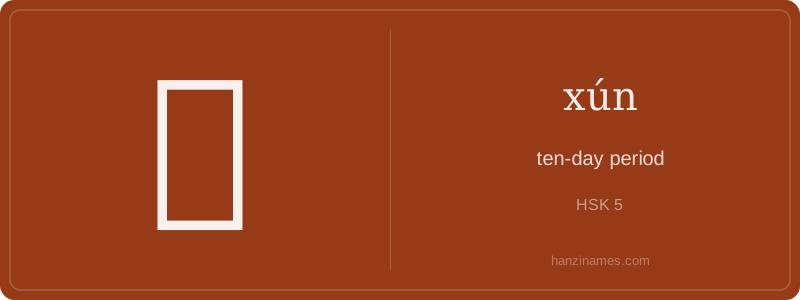
In modern China, 旬 is used officially and statistically: the National Bureau of Statistics releases GDP growth data 'on a旬 basis' (每旬), and weather services issue drought warnings labeled ‘中旬降水偏少’ (precipitation below average in the middle 旬). Common phrases include 上旬、中旬、下旬 and the idiom ‘旬日之间’ (within ten days), found in historical texts like the Records of the Grand Historian. It remains standard in agricultural advisories and public health dashboards.
The character combines 日 (sun/day) with the phonetic component 旬 itself—no pictographic origin; it evolved as a phono-semantic compound during the Warring States period. Its form stabilized in clerical script, not oracle bone. Today, Chinese people most commonly encounter it on government websites, weather apps, and supermarket produce labels indicating harvest timing—e.g., ‘本旬新上市’ (newly available this 旬).
Imagine standing in a bustling Beijing farmers’ market at dawn—vendors unpack crates of fresh bok choy, their labels stamped with dates like ‘上旬’ (shàng xún). This isn’t just calendar talk: it’s how Chinese meteorologists forecast spring frosts, how rice farmers time transplanting, and how state statistical bureaus release economic data every ten days. The character 旬 anchors a rhythm older than the Gregorian calendar—rooted in China’s lunar-solar system where each month naturally divides into three 10-day segments: 上旬 (first), 中旬 (middle), and 下旬 (last).
The radical 日 (rì, 'sun') signals its temporal nature—not a solar day, but a sun-observed cycle. Though only six strokes, 旬 carries institutional weight: national weather bulletins, agricultural extension pamphlets, and even hospital infection-control reports cite it precisely. Unlike vague terms like 'early month,' 旬 eliminates ambiguity—'mid-month' could mean 10th–20th or 12th–22nd; 旬 always means the fixed 11th–20th.
For learners, mastering 旬 unlocks real-world literacy. It appears in HSK 5 listening passages about policy timelines, reading texts on climate adaptation, and official notices from municipal governments. Its simplicity belies its precision: no other Chinese time unit so tightly couples astronomical observation, administrative practice, and everyday language. You won’t hear it in casual chat—but you’ll see it on food safety inspection stickers, hydrological reports, and university exam schedules—all quietly governed by this ancient, efficient ten-day pulse.
Example Sentences
Common Compounds
Similar Characters — Don't Mix These Up
Your First Step into Chinese Culture: Get a Chinese Name
Every journey into Chinese begins with a name. Use our free Chinese name generator to create a meaningful, personalized Chinese name that fits you perfectly.
Get My Chinese Name →