毯
Character Story & Explanation
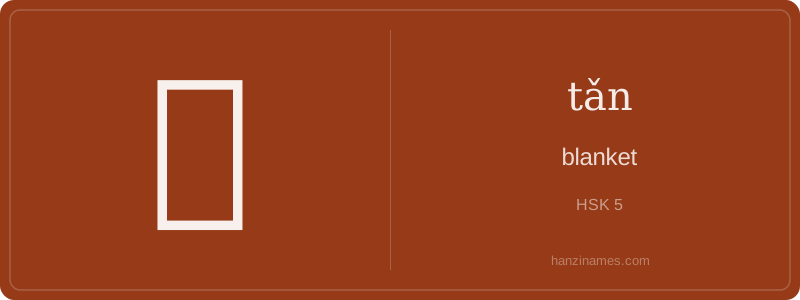
In contemporary China, 毯 is most commonly used in compounds like 地毯 (dìtǎn, carpet) and 毛毯 (máotǎn, wool blanket), appearing in home goods catalogs, hotel amenities, and winter welfare distributions. It features in the standardized phrase ‘送温暖’ (sòng wēnnuǎn, 'delivering warmth'), a government-led initiative since the 1990s providing blankets, coal, and food to impoverished households—documented annually in State Council white papers. The character also appears in safety regulations, e.g., ‘阻燃毯’ (zǔrán tǎn, flame-retardant blanket) required in public transport.
The character is a phono-semantic compound: 毛 (máo) indicates material (hair/fiber), while 典 (diǎn) provides phonetic approximation (tǎn ≈ diǎn in Middle Chinese). No oracle-bone or bronze script form exists—it first appears in Song dynasty dictionaries as a vernacular term for woven coverings, confirming its late emergence tied to textile industrialization.
The character 毯 (tǎn) embodies a quiet, tactile dimension of Chinese daily life—warmth, comfort, and care. Unlike Western notions that often associate blankets with individual privacy or sleep, in Chinese culture, blankets frequently appear in communal, transitional, or protective contexts: draped over elders on park benches, folded neatly beside temple cushions, or gifted during winter visits to rural homes. This reflects a worldview where warmth is relational—not merely thermal, but an act of attentiveness.
Its radical 毛 (máo, 'hair' or 'feather') signals material origin: traditionally, blankets were woven from wool, goat hair, or coarse cotton fibers—substances intimately tied to northern pastoral life and frontier trade. The right component 典 (diǎn, 'ceremonial text' or 'standard') subtly suggests ritual significance: blankets historically lined ancestral tablets during Qing dynasty rites or wrapped imperial edicts for safe transport, linking domestic softness to cultural gravity.
At HSK 5, 毯 appears not as a standalone noun in classical texts, but in modern compound words reflecting China’s evolving material culture—from Soviet-style wool blankets distributed in the 1950s to today’s eco-friendly bamboo-fiber throws sold on Pinduoduo. Its usage traces societal shifts: from scarcity (‘a single blanket shared by three siblings’) to abundance (‘designer throw blankets in Beijing loft apartments’), always holding warmth as both physical necessity and ethical gesture.
Example Sentences
Common Compounds
Similar Characters — Don't Mix These Up
Your First Step into Chinese Culture: Get a Chinese Name
Every journey into Chinese begins with a name. Use our free Chinese name generator to create a meaningful, personalized Chinese name that fits you perfectly.
Get My Chinese Name →