盼
Character Story & Explanation
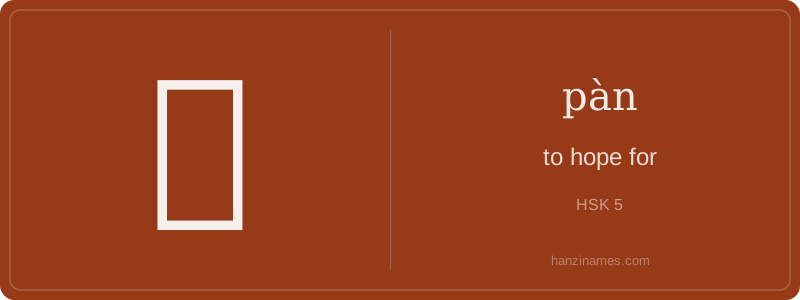
In modern Chinese, 盼 most commonly appears in compound words like 盼望 (pàn wàng, 'to hope for'), 盼头 (pàn tou, 'something to look forward to'), and the literary phrase 左盼右顾 (zuǒ pàn yòu gù, 'looking left and right in anticipation'). It’s frequent in formal writing and emotive speech—e.g., official announcements say ‘全国人民热切期盼’ (the whole nation eagerly awaits) before major events like the Olympics or space missions. The idiom 望眼欲穿 (wàng yǎn yù chuān, 'eyes strained to the point of piercing') often pairs with 盼 to emphasize prolonged, intense waiting.
The character 盼 first appeared in seal script (c. 3rd century BCE), combining 目 (eye) and 分 (to divide/separate). Scholars agree this reflects the core idea: *gazing across a separation*—not just seeing, but seeing *toward someone or something absent*. No oracle bone form survives, but its consistent structure across Qin dynasty bamboo slips confirms its early semantic link between vision and yearning.
Imagine a grandmother in Hangzhou standing at her apartment balcony every evening, eyes scanning the narrow alley below—not just watching, but *盼*: her gaze fixed, breath quiet, heart leaning forward. She’s waiting for her grandson’s bicycle bell to chime—the signal he’s home from university. This isn’t passive looking; it’s purposeful, tender anticipation rooted in care and longing. The character 盼 captures that emotional weight: hope sharpened by time, distance, or uncertainty.
Visually, 盼 centers on the 目 (mù) radical—‘eye’—anchoring its meaning in sight and attention. To 盼 is to look *with intention*, as if your eyes could pull what you desire closer. Unlike generic ‘hope’ (希望), 盼 implies active, embodied waiting: eyes open, posture expectant, emotions quietly taut. It’s the glance toward the train platform, the double-check of the phone screen, the pause before opening an acceptance letter.
In Chinese culture, 盼 carries quiet dignity—not desperation, but steadfast emotional investment. It appears in poetry, letters, and everyday speech when stakes are personal: parents 盼 child’s safe return, students 盼 exam results, elders 盼 family reunions during Spring Festival. Its nine strokes flow with subtle urgency: the left 目 grounds the gaze; the right 分 (fēn, ‘to divide’) hints at separation—making the hope all the more poignant. This is hope measured in glances, not seconds.
Example Sentences
Common Compounds
Similar Characters — Don't Mix These Up
Your First Step into Chinese Culture: Get a Chinese Name
Every journey into Chinese begins with a name. Use our free Chinese name generator to create a meaningful, personalized Chinese name that fits you perfectly.
Get My Chinese Name →