蝶
Character Story & Explanation
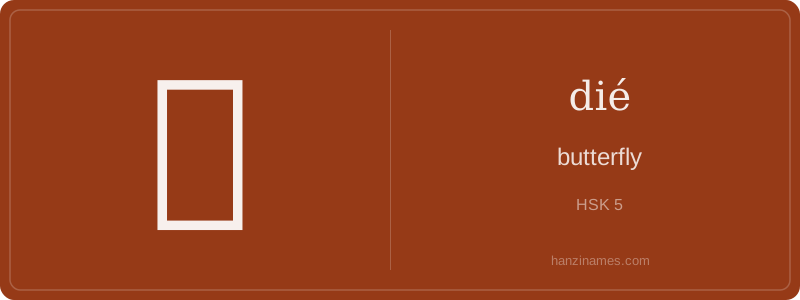
蝶 appears frequently in modern Chinese in ecological contexts (e.g., butterfly conservation parks), classical allusions (like the Zhu-Ying romance), and idioms such as 蝶恋花 (dié liàn huā, 'butterflies fondle flowers'—a poetic tune name and metaphor for tender affection). It’s also used in brand names (e.g., 蝶讯 Diéxùn, a fashion magazine) and scientific terms (蝴蝶效应 diéhú xiàoyìng, 'butterfly effect'). The character has been stable since the seal script era (~3rd c. BCE), with no major semantic shifts.
The character is a phono-semantic compound: 虫 (insect radical, semantic) + 叠 (dié, phonetic component, originally meaning 'to fold/pile', borrowed for sound). No pictographic origin survives—it evolved from clerical script forms, not oracle bones. Today, Chinese students learn it in middle school literature units covering Tang-Song poetry and the Liang-Zhu legend.
The Chinese character 蝶 (dié) means 'butterfly' and belongs to the 'insect' radical 虫—reflecting its biological classification in traditional Chinese taxonomy. With 15 strokes, it’s a moderately complex character taught at HSK Level 5, indicating its use in literary, poetic, or nuanced contexts rather than basic conversation. Its phonetic component 叠 (dié, 'to pile up') hints at pronunciation but not meaning—a common feature in phono-semantic compound characters.
In Chinese culture, butterflies symbolize transformation, love, and the soul’s fragility—most famously in the legend of Liang Shanbo and Zhu Yingtai, where lovers become butterflies after death. Unlike Western associations with rebirth (e.g., Christian Easter), the Chinese butterfly evokes romantic fidelity, transience, and quiet beauty—often appearing in classical poetry, embroidery, and ink painting as an emblem of delicate elegance.
Western equivalents like the Greek Psyche (soul + butterfly) or the Christian ‘resurrection’ motif share themes of metamorphosis, but 蝶 carries stronger connotations of marital devotion and poetic melancholy. While English uses 'butterfly' metaphorically for restlessness ('butterfly mind'), Chinese usage leans lyrical and symbolic: a fluttering 蝶 suggests fleeting joy, unspoken longing, or spiritual lightness—not distraction. This cultural nuance is essential for learners aiming beyond literal translation.
Example Sentences
Common Compounds
Similar Characters — Don't Mix These Up
Your First Step into Chinese Culture: Get a Chinese Name
Every journey into Chinese begins with a name. Use our free Chinese name generator to create a meaningful, personalized Chinese name that fits you perfectly.
Get My Chinese Name →