触
Character Story & Explanation
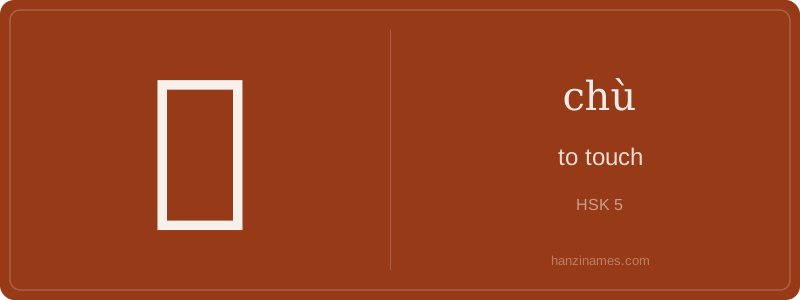
In modern Mandarin, 触 is rarely used alone in speech; it appears almost exclusively in compound words like 触发 (chùfā, 'to trigger') or 触摸 (chùmō, 'to touch physically'). It's central to tech vocabulary (e.g., 触屏 chùpíng, 'touchscreen') and idioms like 触类旁通 (chù lèi páng tōng, 'to infer broadly from one instance'), attested since the Song dynasty in Zhu Xi’s Neo-Confucian commentaries. Government documents use it formally: 触犯法律 (chùfàn fǎlǜ, 'to violate the law').
The character’s form is not pictographic but phono-semantic: 角 (jiǎo, 'horn') serves as the semantic radical—suggesting sharp, direct contact—while 虫 (chóng, 'insect') was historically a phonetic component approximating the Old Chinese pronunciation *tʰuk*. No oracle bone or bronze inscriptions contain 触; it first appears reliably in Warring States bamboo manuscripts.
As an archaeologist brushing dust from a Han dynasty bamboo slip, I find 触 inscribed in clerical script—its 'horn' radical (角) unmistakably evoking ancient ritual vessels and martial readiness. The right side, 虫 (insect), is not literal but phonetic: in Old Chinese, *tʰuk* sounded close to the root for 'contact', while the horn symbolized sharp, immediate impact—like antlers locking or a spear’s point meeting flesh.
This character emerged during the Warring States period as writing standardized; early forms show 角 paired with variants of 虫 or 疋, reflecting its core idea: physical contact with consequence. Unlike gentle 摸 (mō, 'to feel'), 触 implies intentionality and potential consequence—like touching a live wire or a taboo subject. Its structure captures not just touch, but the moment before reaction begins.
By the Tang dynasty, 触 had expanded metaphorically: poets used it for emotional ‘contact’ (e.g., 触景生情, 'moved by the scene'), and legal texts employed it for 'violating' statutes. Its semantic weight never diminished—it remains a high-register verb, reserved for precise, often formal or literary contexts: scientific sensation, legal infringement, or philosophical awakening—not casual fingertip taps.
Example Sentences
Common Compounds
Similar Characters — Don't Mix These Up
Your First Step into Chinese Culture: Get a Chinese Name
Every journey into Chinese begins with a name. Use our free Chinese name generator to create a meaningful, personalized Chinese name that fits you perfectly.
Get My Chinese Name →