诗
Character Story & Explanation
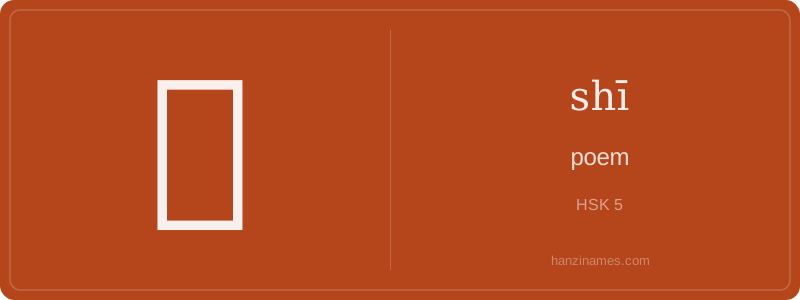
诗 is central to China’s literary heritage and daily cultural practice: students memorize classical poems for the Gaokao (national college entrance exam); couples quote lines from the Book of Songs at weddings; and ‘Poetry Day’ events are held nationwide on April 23rd, coordinated by the China Writers Association. Common phrases include 唐诗 (Táng shī, Tang dynasty poetry) and 诗人 (shī rén, poet)—a title still conferred with deep respect, as seen in official honors for living poets like Yu Guangzhong.
The character evolved from seal script around the Warring States period. Its right component 寺 originally meant ‘government office’ (not ‘temple’ in early usage), reflecting poetry’s role in state rituals and bureaucratic training. The left 讠 (speech radical) confirms its oral-literate nature—consistent with archaeological evidence that early ‘poems’ were chanted during sacrifices and diplomacy.
The character 诗 (shī) embodies the Chinese reverence for language as both art and moral compass. Unlike Western notions of poetry as mere aesthetic expression, classical Chinese poetry was inseparable from ethics, governance, and self-cultivation—Confucius declared, 'The Odes can inspire, can inform, can unite, can express resentment' (Analects 17.9). This reflects a worldview where words shape reality and poetry trains the heart before the hand.
Its radical 讠 (speech) signals that poetry is fundamentally spoken and communal—not private lyricism but socially resonant utterance. Even in calligraphy, 诗 flows with rhythmic balance: the left side’s speech radical grounds meaning, while the right side (寺, originally ‘temple’ or ‘government office’) hints at poetry’s historical role in court ritual, civil service exams, and ancestral rites—where verse demonstrated virtue as much as talent.
In modern China, 诗 retains this dual weight: it appears in national curricula teaching Tang dynasty masters like Li Bai and Du Fu, and in grassroots movements like ‘poetry therapy’ in hospitals and migrant worker communities. To write or recite 诗 is still to participate in a 3,000-year-old covenant—where disciplined language cultivates humanity, and every line carries the quiet gravity of harmony between heaven, earth, and human feeling.
Example Sentences
Common Compounds
Similar Characters — Don't Mix These Up
Your First Step into Chinese Culture: Get a Chinese Name
Every journey into Chinese begins with a name. Use our free Chinese name generator to create a meaningful, personalized Chinese name that fits you perfectly.
Get My Chinese Name →