伏
Character Story & Explanation
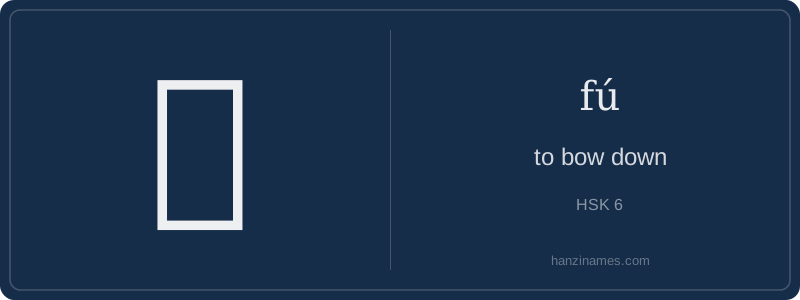
In modern Mandarin, 伏 appears most frequently in formal and literary contexts: in idioms like 卧虎藏龙 (wò hǔ cáng lóng, 'crouching tiger, hidden dragon'), where 伏 is implied in 卧 (to lie down); in the seasonal term 三伏天 (sān fú tiān, 'the three hottest periods'), referencing the ancient practice of 'submitting to summer heat'; and crucially in 伏笔 (fúbǐ, 'foreshadowing'), a cornerstone of Chinese narrative tradition. Historically, 伏 was standard in classical texts to denote submission to authority (e.g., 伏罪, 'to confess guilt').
The character’s form is not pictographic but phono-semantic: 亻 (person) + 夫 (fū, here serving as a phonetic component approximating fú). While 夫 originally meant 'adult male', its sound was borrowed—no oracle-bone pictograph of 'leaning' survives for 伏. Instead, think of a student 伏案 (fú àn) today: bent over a desk, deeply focused—a universal, living usage documented across textbooks and office life.
As an archaeologist brushing dust from a Han dynasty bamboo slip, I find 伏 inscribed in elegant clerical script—not as a static glyph, but as a gesture frozen in time: a person (亻) lowering their torso, head bowed in submission, concealment, or quiet vigilance. This isn’t mere posture; it’s embodied strategy—think of soldiers lying low before battle or scholars bowing to receive wisdom. The character encodes a physical act charged with intentionality: yielding not out of weakness, but as tactical stillness.
The radical 亻 (person) anchors the meaning in human agency, while the right component, 伏’s phonetic ‘fú’-bearing element 夫, originally depicted a strong man—but here, transformed through semantic compounding into 'one who bends'. Excavations of Mawangdui medical texts reveal 伏 used precisely in contexts of 'lying prone for therapy', confirming its ancient association with controlled, purposeful reclining—far beyond casual leaning.
Over centuries, 伏 fossilized this duality: physical posture and strategic posture. In Tang poetry, it evokes humility before nature; in Ming military manuals, it denotes ambush tactics. Even today, when a Chinese speaker says '伏笔' (fúbǐ), they invoke this layered history—the 'bent-down brushstroke' of narrative foreshadowing. Every use echoes that original crouch: grounded, attentive, ready—not passive, but poised.
Example Sentences
Common Compounds
Similar Characters — Don't Mix These Up
Your First Step into Chinese Culture: Get a Chinese Name
Every journey into Chinese begins with a name. Use our free Chinese name generator to create a meaningful, personalized Chinese name that fits you perfectly.
Get My Chinese Name →