伶
Character Story & Explanation
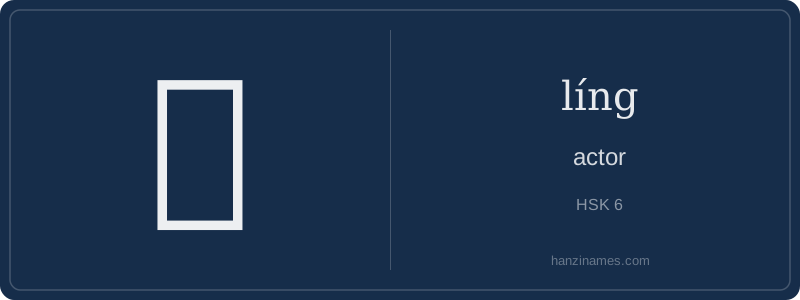
In historical China, 伶 (líng) specifically denoted professional performers serving the imperial court or aristocratic households — known as 伶人 (líng rén). During the Tang and Song dynasties, famed 'lingren' were celebrated for their mastery of music, dance, and drama; some even advised emperors. Though socially marginalized early on, elite performers gained prestige over time — hence the compound 名伶 (míng líng), meaning 'renowned stage artist'. Today, 伶 survives primarily in formal terms, literary works, and cultural criticism — rarely in spoken Mandarin.
The character is not pictographic; it’s a phono-semantic compound. Left side 亻 ('person') indicates meaning; right side 令 (lìng) provides pronunciation and subtle semantic resonance — 令 originally meant 'to issue a command', evoking the performer’s authoritative stage presence and disciplined artistry. No oracle-bone or bronze script forms survive; earliest attestation is in Warring States bamboo texts referring to court musicians.
Hi students! Let’s learn 伶 (líng), a character meaning 'actor' or 'actress'. It’s a Level 6 HSK word — not super common in daily speech, but essential for understanding Chinese performing arts and classical literature. Notice its radical 亻 (the 'person' radical) on the left — this tells us it’s related to people. The right side, 令 (lìng), is both a sound clue and carries connotations of 'command' or 'graceful authority', hinting at the skilled, commanding presence of performers.
This character has deep roots in traditional Chinese theatre. In imperial times, 'lingren' (伶人) referred specifically to professional performers — often stigmatized socially but highly respected artistically. Today, 伶 appears mostly in formal, literary, or historical contexts — not in casual chat like 'I watched a movie'. You’ll see it in terms like 名伶 (famous actor) or in essays about Peking Opera. It’s elegant, precise, and culturally rich.
Don’t confuse 伶 with more general words like 演员 (yǎnyuán, 'actor/actress') — 伶 carries artistic prestige and historical weight. Think of it like the difference between 'thespian' and 'actor' in English: same role, different register. Its 7-stroke structure is simple to write: start with the person radical (two strokes), then add the 令 component (five strokes). Practice writing it slowly while saying 'líng' aloud — linking sound, shape, and meaning helps memory!
Example Sentences
Common Compounds
Similar Characters — Don't Mix These Up
Your First Step into Chinese Culture: Get a Chinese Name
Every journey into Chinese begins with a name. Use our free Chinese name generator to create a meaningful, personalized Chinese name that fits you perfectly.
Get My Chinese Name →