仓
Character Story & Explanation
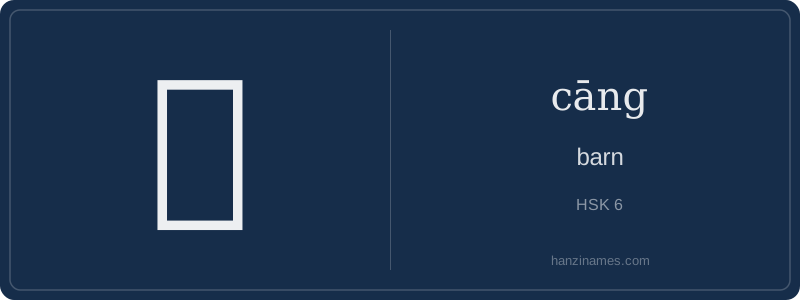
In contemporary China, 仓 is ubiquitous in logistics and policy: China’s National Grain and物资 Reserve Administration (国家粮食和物资储备局) uses 仓 in official documents referring to strategic grain reserves—over 700 million metric tons stored across thousands of modern granaries. Common phrases include 仓库管理 (wùcāng guǎnlǐ, warehouse management) and 仓单 (cāngdān, warehouse receipt), a legally recognized financial instrument in commodity trade.
The character’s form is not a pictograph of a barn, but a simplified evolution from seal script, where it resembled a covered structure with a roof and storage space beneath. Its modern shape ( + 一 + 人) reflects standardization in the 1956 script reform—no oracle-bone origin is documented; instead, today’s learners see it daily on warehouse signage, e-commerce logistics pages, and food safety labels indicating ‘storage conditions’.
The character 仓 (cāng) evokes the image of a sturdy, low-slung granary nestled in a northern Chinese village—its earthen walls thick against winter winds, its wide doors open to dry millet under autumn sun. Historically, such barns were lifelines: storing grain for famine relief, tax payments to imperial officials, and spring sowing. The character’s simplicity—just four strokes—belies its weight in China’s agrarian past, where grain security meant societal stability.
Though modern logistics have replaced rural barns with high-tech grain silos and national reserves, 仓 remains deeply embedded in language and governance. It appears in terms like 仓库 (wùcāng, warehouse), 国库 (guókù, state treasury), and even metaphorically in 仓促 (cāngcù, hasty)—suggesting the urgency born when storage fails or time runs short. Its radical 人 (rén, 'person') hints at human stewardship: grain isn’t just stored—it’s guarded, managed, and shared by people.
At HSK Level 6, 仓 signals advanced lexical awareness—not just as ‘barn’, but as a semantic root for concepts of containment, reserve, and readiness. Learners encounter it in formal writing, economic reports, and historical texts. Mastering 仓 unlocks nuanced understanding of China’s food security policies, supply chain vocabulary, and classical idioms like 仓皇失措 (cānghuáng shīcuò, ‘flustered and disoriented’), where the ‘warehouse’ implies sudden loss of stored composure.
Example Sentences
Common Compounds
Similar Characters — Don't Mix These Up
Your First Step into Chinese Culture: Get a Chinese Name
Every journey into Chinese begins with a name. Use our free Chinese name generator to create a meaningful, personalized Chinese name that fits you perfectly.
Get My Chinese Name →