饭
Character Story & Explanation
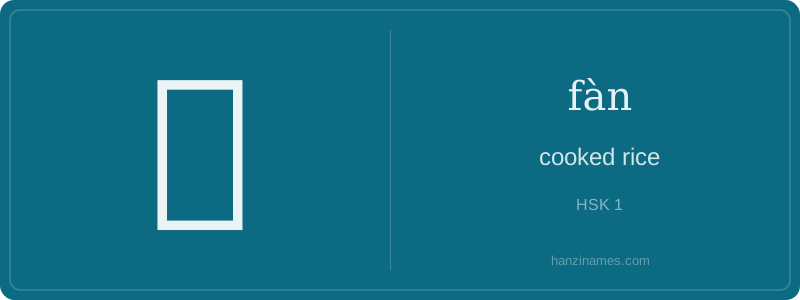
饭 appears in the earliest standardized Chinese script (Small Seal Script, 3rd c. BCE) and was already used in the Warring States period (475–221 BCE) to denote 'cooked cereal food', especially rice or millet. It’s ubiquitous in daily speech: the greeting 吃饭了吗?is documented in Ming dynasty vernacular literature and remains the most common polite inquiry across China—even more frequent than 'How are you?'. Common compounds include 米饭 (mǐfàn, 'steamed rice') and 饭店 (fàndiàn, 'restaurant').
The character evolved from Bronze Script forms showing a cooking vessel (缶) with steam rising; by Han dynasty, it stabilized into its current shape with the food radical 饣 on the left and 反 on the right—no longer pictographic, but clearly semantic-phonetic. Today, it’s written thousands of times daily on restaurant menus, school lunch notices, and WeChat messages—always signaling shared presence and care.
The character 饭 (fàn) embodies the centrality of food—especially rice—as both physical sustenance and social glue in Chinese culture. Unlike Western notions where 'meal' is abstract, 饭 grounds daily life in tangible nourishment: sharing rice signifies kinship, hospitality, and continuity. Its radical 饣 (food) anchors it in material reality, while the phonetic component 反 (fǎn) historically aided pronunciation—not meaning—but together they evoke a rhythm of routine: waking, working, returning home to eat. This simplicity reflects Confucian ideals: harmony begins at the table.
In classical texts like the Analects, 'eating rice' symbolizes basic human dignity—Confucius lamented rulers who let people starve, saying 'if the people have no rice, how can virtue flourish?' Even today, asking someone 吃饭了吗?(Have you eaten?) is less about nutrition than about care and connection—a verbal bow acknowledging shared humanity. The word transcends literal rice to mean 'a proper, grounded life.'
Modern usage reveals subtle worldview layers: ordering 'a bowl of rice' (一碗饭) is standard, but calling something 'not even a bowl of rice' (连一碗饭都不如) expresses profound worthlessness—showing how deeply rice measures value. In rural China, offering rice first to ancestors before eating affirms filial piety as cyclical nourishment: past feeds present, present feeds future. Thus, 饭 is not just cooked grain—it’s time, relationship, and moral order made edible.
Example Sentences
Common Compounds
Similar Characters — Don't Mix These Up
Your First Step into Chinese Culture: Get a Chinese Name
Every journey into Chinese begins with a name. Use our free Chinese name generator to create a meaningful, personalized Chinese name that fits you perfectly.
Get My Chinese Name →