叮
Character Story & Explanation
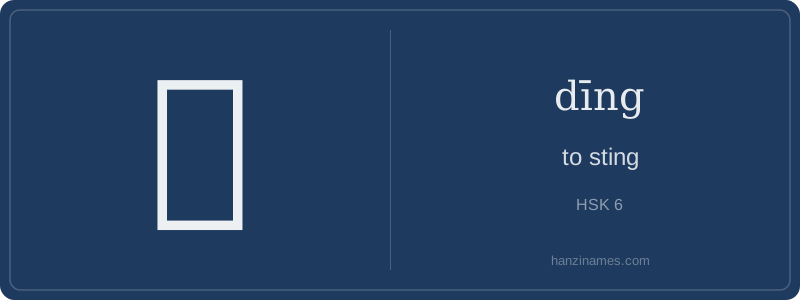
叮 is widely used in contemporary Mandarin to describe both literal insect bites (e.g., 蚊子叮 — mosquito bite) and figurative ‘nagging’ or ‘earnest reminders’ (e.g., 老师叮咛学生 — teacher reminds students). It appears in the standard phrase 叮嘱 (dīngzhǔ), meaning ‘to enjoin solemnly’, listed in authoritative dictionaries like the Xiandai Hanyu Cidian. Historically, 叮 first appeared in Song-era texts as an onomatopoeic character for sharp, brief sounds — later extended to actions with similar abruptness or persistence.
The character is not pictographic; its form combines 口 (‘mouth’, indicating sound production) and 丁 (dīng, originally a nail-shaped symbol, here serving phonetically). There is no oracle bone or bronze script form — it emerged later in clerical script. Today, Chinese people commonly type 叮 in messaging apps to mimic alert sounds (e.g., ‘叮!你有新消息’), making it a living part of digital communication.
Hi students! Let’s learn 叮 (dīng) — a small but vivid character with just five strokes and the ‘mouth’ radical (口). Though it looks simple, 叮 is not about speaking — it’s an onomatopoeic character representing a sharp, high-pitched sound, like a quick 'ding!' or 'tink!' In classical and modern Chinese, it’s used to imitate short, crisp noises — especially those linked to light impacts or tiny stings. Don’t confuse it with characters meaning ‘speak’; here, 口 signals sound production, not speech.
This character appears frequently in reduplication (e.g., 叮叮) to emphasize repetition or urgency — think of an alarm clock, a persistent mosquito, or someone nagging gently. It’s often paired with verbs like 叮嘱 (to instruct earnestly) or 叮咬 (to sting/bite), where the sound metaphor extends into action: a ‘sharp, repeated impact’ becomes ‘repeated urging’ or ‘biting with precision’. Its tone (first tone, dīng) is steady and clear — practice saying it like ‘dee-ng’ with a level pitch.
As an HSK Level 6 character, 叮 isn’t common in beginner texts, but it’s essential for understanding nuanced expressions, literary descriptions, and everyday metaphors. You’ll encounter it in news reports about insect-borne disease warnings (e.g., 蚊子叮人), parenting language (妈妈叮咛孩子), or even tech contexts (系统叮咚提示音 — system ‘ding’ notifications). Mastering 叮 helps you hear the rhythm and texture of spoken and written Chinese — where sound, action, and meaning beautifully overlap.
Example Sentences
Common Compounds
Similar Characters — Don't Mix These Up
Your First Step into Chinese Culture: Get a Chinese Name
Every journey into Chinese begins with a name. Use our free Chinese name generator to create a meaningful, personalized Chinese name that fits you perfectly.
Get My Chinese Name →