呵
Character Story & Explanation
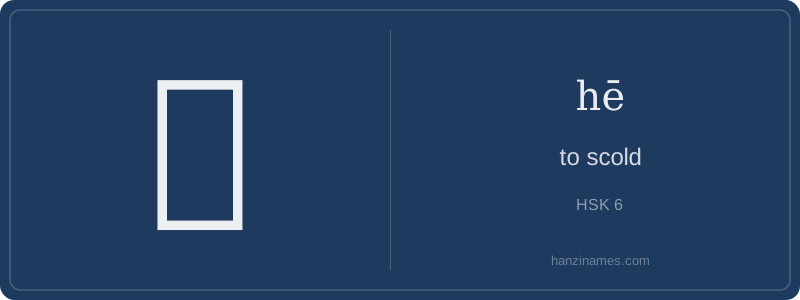
呵 is rarely used alone in modern spoken Mandarin; it appears predominantly in fixed expressions, classical allusions, or literary prose. A well-documented phrase is 呵斥 (hēchì), meaning 'to rebuke sternly', frequently found in historical texts and official discourse—for example, in records of imperial edicts or Confucian commentaries criticizing moral failings. The term also appears in modern news reporting when describing authoritative reprimands by regulators or party discipline organs.
The character 呵 combines the 口 (mouth/speech) radical with 可 (kě, 'can/acceptable'), suggesting speech that affirms or enforces standards—i.e., utterance that declares something 'unacceptable'. While its earliest attestation is in Han dynasty bamboo slips (2nd c. BCE), it was standardized in the Shuowen Jiezi (121 CE) as a verb denoting stern vocal correction. No oracle bone form exists; its structure reflects semantic composition, not pictography.
The Chinese character 呵 (hē) is a verb meaning 'to scold' or 'to reprimand', often with an undertone of sternness, disappointment, or corrective authority—less about anger and more about moral or behavioral correction. It appears in formal, literary, or semi-archaic contexts rather than casual speech. Unlike English verbs like 'yell' or 'shout', 呵 carries a sense of dignified rebuke, frequently used by elders, teachers, or officials addressing subordinates or juniors.
In classical and modern written Chinese, 呵 conveys a measured, almost ritualized censure—not explosive rage but principled disapproval. Its tone is closer to a teacher sighing while correcting a student’s mistake than a parent shouting in frustration. This reflects Confucian values emphasizing respectful hierarchy and pedagogical discipline: scolding is not personal venting but a duty-bound act of guidance.
Western equivalents include the British 'chide' or 'reprove'—words that imply gentle yet firm correction—and the German 'tadeln', which similarly suggests ethical or normative censure. Unlike 'berate' (which implies harsh intensity) or 'scold' (often childish or emotional), 呵 retains gravitas and restraint, aligning more with judicial or pedagogical authority than interpersonal conflict.
Example Sentences
Common Compounds
Similar Characters — Don't Mix These Up
Your First Step into Chinese Culture: Get a Chinese Name
Every journey into Chinese begins with a name. Use our free Chinese name generator to create a meaningful, personalized Chinese name that fits you perfectly.
Get My Chinese Name →