慨
Character Story & Explanation
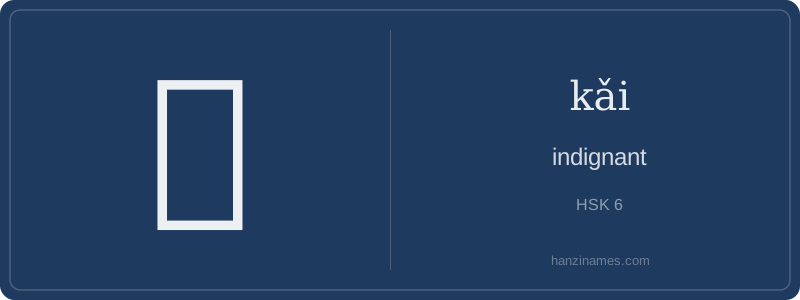
In modern Chinese, 慨 appears most frequently in fixed expressions like 感慨 (gǎnkǎi, 'to sigh with emotion') and 慷慨 (kāngkǎi, 'generous' — literally 'bold and stirred'). Historically, it appears in classical texts such as the Book of Rites (Lǐjì) and Tang dynasty poetry, where poets used 慨 to express sorrowful indignation toward social injustice or the passage of time. A well-documented usage is in Du Fu’s poem 'Spring View', where 慨 reflects profound grief over war-torn Chang’an.
The character evolved from seal script, where the left side (忄) clearly marks the heart radical, and the right side (既) originally meant 'already complete' but here serves phonetically (jì → kǎi via historical sound shift). No pictographic origin — it’s a semantic-phonetic compound, standardized by the Qin dynasty script reforms.
Hi students! Let’s learn 慨 (kǎi), a character you’ll meet at HSK Level 6 — the highest level of proficiency. It belongs to the 忄 (heart/mind) radical, which tells us this character relates to inner feelings. Though often translated as 'indignant', its core idea is stronger: a deep, stirred-up emotional response — usually righteous anger or sorrowful indignation, not petty annoyance. Think of it as the heart ‘shaking’ with moral intensity.
This character isn’t used alone in modern speech — you’ll almost always see it in compound words like 感慨 or 慷慨. Its tone (kǎi, third tone) is firm and falling-rising, like a sigh that turns into a protest. Pronounce it clearly, with your voice dipping then rising slightly — practice with a mirror to feel the jaw drop on the fall!
Remember: 慨 is *not* casual. It carries weight — like a scholar lamenting injustice or a veteran reflecting on lost comrades. It’s literary, formal, and emotionally elevated. That’s why it appears in speeches, essays, and classical-style writing — never in texts like 'Hey, I’m annoyed my coffee’s cold!' Keep this register awareness central as you study it.
Example Sentences
Common Compounds
Similar Characters — Don't Mix These Up
Your First Step into Chinese Culture: Get a Chinese Name
Every journey into Chinese begins with a name. Use our free Chinese name generator to create a meaningful, personalized Chinese name that fits you perfectly.
Get My Chinese Name →